Top Bleisure Resorts in America: The 2026 Definitive Reference
The landscape of the American executive retreat has undergone a structural metamorphosis, moving from the monolithic business hotels of the early 2010s to a highly fragmented, luxury-driven ecosystem of “Hybrid Nodes.” By 2026, the elite traveler no longer differentiates between a productive Tuesday and a restorative Saturday; the two are woven into a single, high-performance tapestry. Identifying the top bleisure resorts in America now requires a forensic look at how properties balance enterprise-grade technical resilience with what psychologists call “Soft Fascination,” the ability of an environment to restore directed attention through natural beauty.
The primary driver of this shift is the “Transient Sovereign,” a class of professionals whose output is untethered from a specific zip code but remains strictly dependent on a high-fidelity environment. A true bleisure resort in the current era is not merely a hotel with a business center; it is a “Sovereign Productivity Node.” These destinations must provide an invisible backbone of redundant 6G and fiber-optic connectivity, while simultaneously offering a “Biometric Reset” that a standard office cannot replicate. In this refined market, luxury is defined by the absence of friction.
However, the proliferation of the “bleisure” label has led to significant “Amenity Inflation,” where mid-tier properties claim high-level readiness without the underlying structural integrity. For the serious professional, a “pretty view” is a liability if it comes with high-latency Wi-Fi or inadequate acoustic isolation. This article serves as the definitive reference for navigating the American landscape of high-stakes blended travel, moving past the marketing hype to examine the structural, fiscal, and cognitive frameworks that define a world-class bleisure asset.
Understanding “top bleisure resorts in america”
To accurately define the top bleisure resorts in America, one must look beyond the surface-level luxury and examine the “Work-Life Integrity” of the property. A premier asset is defined by three distinct layers of excellence.
Multi-Perspective Explanation
From a Technical Perspective, excellence is binary. A property either provides “Mission-Critical Continuity” including low-latency VPN tunneling and redundant power syste, ms or it does not. In the 2026 market, the top-tier resorts have moved beyond standard Wi-Fi into private, encrypted mesh networks for each guest, ensuring that a high-definition board meeting in an Aspen villa is as secure as one in a Manhattan headquarters.
From a Restorative Perspective, these resorts act as “Cognitive Flush” mechanisms. They are situated in “Blue Space” (coastal) or “Green Space” (forest/mountain) environments that are scientifically proven to lower cortisol. The luxury here is not the thread count of the linens, but the “Distance to Nature,” where the transition from a high-stress spreadsheet to a wilderness trail is measured in minutes, not miles.
From a Social Perspective, the top resorts function as “Incubators of Ambient Networking.” These are locations where the “Third Pl, ace” the lounge, the library, or the high-end coffeenclaveve is populated by a peer group of similar professional status. This creates a “Professional Gravity” that keeps the traveler grounded in their career identity even while in a state of leisure.
Oversimplification Risks
The most common misunderstanding is the “Amenity Fallacy,” where travelers assume that a high-end pool or a Michelin-starred restaurant makes a property good for bleisure. In reality, properties designed purely for consumption often lack “Acoustic Sovereignty,” the ability to find a truly silent, professional-grade space for a 6:00 AM global call. Another risk is “Infrastructure Optimism,” assuming that “high-speed internet” in a remote mountain resort can handle a sustained 4K video stream across a corporate firewall.
Contextual Background: The Decentralization of the American C-Suite
The history of the American professional retreat has moved from the “Country Club Era” of the 1960s, where work was strictly separate from play, to the “Blackberry Burnout Era” of the 2000s, where work simply invaded every leisure hour. In 2026, we have reached the “Integrated Sovereign Era.”
This transition was accelerated by the massive corporate divestment from permanent office real estate in major metros like San Francisco and New York. As companies traded rent for “Off-site Budgets,” the demand for high-performance resorts skyrocketed. This has led to the rise of “Secondary Market Hubs” cities like Charleston, SC, Boise, ID, and Asheville, NC, which have developed luxury infrastructures specifically to catch the overflow of mobile executives seeking a “Deep Work” environment paired with a “High-Quality Reset.”
Conceptual Frameworks and Mental Models
To select among the top bleisure resorts in America, professionals should apply these three core frameworks.
1. The “Latency-to-Leisure” Index
This model measures the time it takes to move from a high-stakes professional task to a world-class restorative activity. A “Five-Star Index” is less than five minutes (e.g., a beachfront villa in Maui where the ocean is 50 steps from the desk).
2. The “Cognitive Load” Reduction Model
Evaluate a resort by how many “Micro-Decisions” it removes from your day. Top resorts provide “Frictionless Logistics”—onsite high-quality nutrition, gear for outdoor activities, and pre-configured workstations. If you have to spend 45 minutes finding a place for lunch, the resort has failed its bleisure mandate.
3. The “Time-Zone Arbitrage” Strategy
Working from a West Coast resort for an East Coast firm creates a “Golden Window” in the afternoon. By starting at 6:00 AM local time, the professional finishes their day at 2:00 PM, leaving four prime daylight hours for high-value leisure.
Key Categories of U.S. Bleisure Assets
| Category | Strategic Strength | Key Trade-off | Example Nodes |
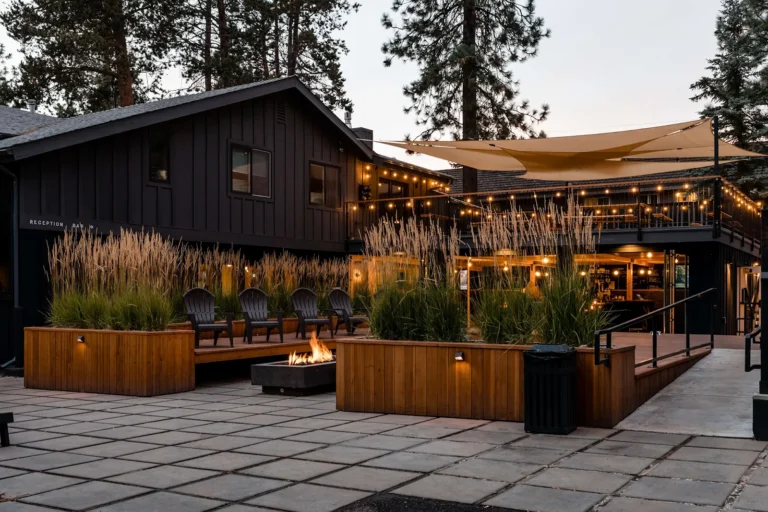
| The Alpine Enclave | High “Soft Fascination”; crisp focus. | Seasonal logistics (snow/closures). | White Elephant, Aspen; Montage Deer Valley |
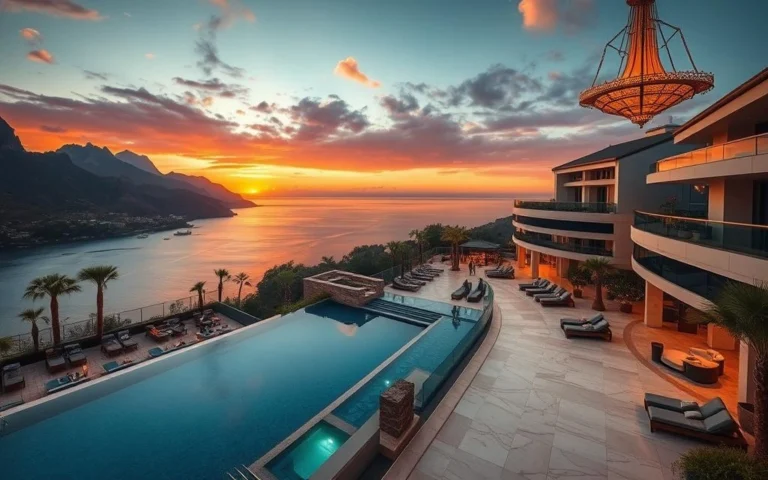
| The Maritime Node | Circadian reset; maritime air. | Humidity; salt-air tech wear. | FS Hualalai, HI; The Cloister, Sea Island |
| The Desert Modernist | Visual minimalism; zero distraction. | Extreme heat windows. | Amangiri, UT; Ritz-Carlton Dove Mountain |
| The Urban Sanctuary | High peer density; service speed. | High noise floor; high burn rate. | The Langham, Chicago; Pendry West Hollywood |
| The Agricultural Retreat | Long-view thinking; sustainability. | Slower transit; isolated services. | Auberge du Soleil, Napa; Blackberry Farm |
Detailed Real-World Scenarios and Decision Logic
The “Deep-Sprint” Isolation
A software architect needs to finalize a core platform migration over seven days.
-
The Choice: Amangiri, Utah.
-
The Logic: The desert’s visual minimalism removes “Decision Fatigue.” The resort’s private villas provide “Acoustic Sovereignty.”
-
Failure Mode: Choosing a “Family-Centric” resort where the ambient noise of a water park fragments the architect’s flow state.
The “East-West” Arbitrage
A New York-based partner at a law firm moves to Four Seasons Resort Hualalai, Hawaii.
-
The Logic: Working from 4:00 AM to 12:00 PM HST aligns with the NYC workday. The partner is “offline” for the New York afternoon, which they spend in the Pacific.
-
Outcome: The “Biometric Reset” provided by the ocean environment prevents the burnout typically associated with 80-hour weeks.
Planning, Cost, and Resource Dynamics
The “Fiscal Integrity” of a bleisure stay depends on a clear separation of “Professional Infrastructure” from “Leisure Enhancements.”
2026 Bleisure Resource Mapping (Average Daily Rates)
| Tier | Housing & Office | Tech & Connectivity | Restoration (Spa/Gear) | Total Daily Burn |
| Executive | $850 – $1,200 | Included | $200 | $1,050+ |
| Sovereign | $1,800 – $3,500 | $250 (Redundant) | $600 | $2,650+ |
| Elite Node | $5,000+ | $1,000 (Private) | $1,500 | $7,500+ |
Tools, Strategies, and Support Systems
To operate at peak levels from the top bleisure resorts in America, the professional must deploy a “Hardened Mobility Stack”:
-
Redundant Connectivity: Pairing resort fiber with a dedicated 6G hotspot and a Starlink Mini for emergency failover in mountain regions.
-
Acoustic Isolation: Active noise-canceling peripherals paired with “Sound-Masking” software to create a private office bubble in non-traditional spaces.
-
Ergonomic “Fly-Away” Kits: Lightweight, foldable laptop stands and mechanical keyboards to ensure physical health during 8-hour sessions.
-
Split-Folio Automation: Using hospitality apps that allow for instant, itemized segmentation of business vs. personal expenses for corporate compliance.
-
Biometric Monitoring: Using wearables to track “Recovery Scores.” If sleep quality doesn’t improve at the resort, the location is failing its restorative mandate.
-
“Shadow-Fare” Documentation: Keeping a record of what a “Business-Only” flight would have cost to prove that a bleisure extension did not increase the employer’s cost.
Risk Landscape and Taxonomy of Failure Modes
-
“Infrastructure Mirage”: A resort advertising “high-speed Wi-Fi” that collapses during peak morning hours when everyone logs on for Zoom.
-
“The Boundary Dissolution”: When the beauty of the resort makes it impossible to “leave” work, leading to higher stress because you are constantly surrounded by things you should be enjoying but can’t.
-
“The Compliance Cliff”: Failing to account for “State-Line Tax Nexus.” Working more than 14-30 days in some states can trigger personal income tax liabilities.
Governance, Maintenance, and Long-Term Adaptation
A successful bleisure lifestyle requires a “Quarterly Geo-Audit,” a review of whether your chosen hubs are still serving your productivity.
-
Review Cycle: Every 90 days, assess: “Did my output per hour increase or decrease?” “Was my biometric recovery significant?”
-
The Bleisure Checklist:
-
Confirmed Mbps stability > 500Mbps up/down?
-
Noise floor in suite < 35dB?
-
Proximity to “Restorative Space” < 5 min?
-
Corporate security compliance (VPN/Hardened Router)?
-
Measurement, Tracking, and Evaluation
-
Leading Indicators: “Time-to-Deep-Work”; “Network Latency”; “Distance to Nature.”
-
Lagging Indicators: “Output Quality”; “Self-Reported Burnout Level”; “Restorative Sleep Cycles.”
-
Documentation Examples:
-
The “Work-Environment Log”: Tracking which environments led to the most breakthrough ideas.
-
The “Technical Fail-Log”: Recording any infrastructure hiccups to avoid that resort in the future.
-
Common Misconceptions and Oversimplifications
-
“It’s just a vacation”: False. A vacation is for consumption; bleisure is for production in a superior environment.
-
“You’ll save money”: False. High-performance bleisure is almost always more expensive than a home base due to redundant tech and premium housing.
-
“Any room is an office”: False. Working from a hotel bed or a low-slung lounge chair for more than two days leads to musculoskeletal failure.
-
“Wi-Fi is enough”: False. Secure, low-latency, and redundant connectivity is the only way to maintain institutional authority remotely.
-
“Small towns want you”: False. Some “lifestyle” hubs are seeing pushback due to housing inflation; ethical bleisure means using managed “Hybrid-Live” assets.
-
“The laptop is the only tool”: False. High-output professionals require external monitors, ergonomic peripherals, and dedicated lighting for high-stakes calls.
Conclusion
The architecture of the top bleisure resorts in America is a testament to the “Sovereignty of the High-Value Worker.” In 2026, the resorts that thrive are those that solve for the total human, providing the ironclad digital infrastructure of a skyscraper with the soul-nourishing environment of a national park. Success in this modality is not about escaping work; it is about building a professional life where work and restoration are no longer in competition, but in a state of productive synergy.