Luxury Bleisure Lifestyle USA: The 2026 Definitive Reference
The maturation of the American executive landscape has moved beyond the transitional phase of “remote-capable” into a permanent architecture of high-stakes mobility. By 2026, the traditional boundaries that once separated corporate obligation from private restoration have dissolved, replaced by a sophisticated, integrated modality. This evolution is not merely about convenience; it is a calculated response to the increasing cognitive load of global commerce. For the high-level professional, the ability to maintain institutional authority while immersed in a restorative environment is no longer a luxury perk; it is a functional necessity for long-term psychological and professional resilience.
This systemic shift has given rise to a specific demographic of “Transient Sovereigns” individuals who prioritize environmental variety as a catalyst for creative and analytical performance. In the United States, this trend is manifesting through the development of “Infrastructure-Rich Seclusion.” Whether it is a vineyard in the Napa Valley or a high-altitude tech enclave in the Rockies, the focus has shifted toward environments that provide “Total Frictionless Continuity.” The objective is to achieve a state where the digital backbone is so robust that it becomes invisible, allowing the traveler to oscillate between a high-stakes boardroom session and a private wellness modality without a single logistical or technical hiccup.
However, the proliferation of “bleisure” as a marketing buzzword has introduced significant noise into the market. Much of what is advertised as a blended lifestyle is, in reality, a compromised version of both work and leisure. True mastery of this lifestyle requires a forensic understanding of environmental engineering, time-zone ergonomics, and “Third-Place Density.” It demands a departure from the “laptop-at-the-pool” cliché toward a rigorous framework of “Sovereign Productivity.” This article serves as the definitive reference for architecting such a life, providing a deep-dive analysis into the structural, fiscal, and psychological drivers of this elite modality.
Understanding “luxury bleisure lifestyle usa”

To fundamentally define the luxury bleisure lifestyle usa, one must first decouple the concept from traditional vacations. It is not an extension of a holiday; it is the reorganization of professional presence around high-value geographies.
Multi-Perspective Explanation
From a Cognitive Perspective, excellence in this lifestyle is defined by the “Restoration-to-Output Ratio.” The objective is to leverage specific natural or cultural stimuli, i such as the “soft fascination” of a coastal vista or the minimalist aesthetic of a high-desert retreat, to lower cortisol levels and enhance “divergent thinking.” In this context, luxury is the removal of cognitive “drag,” allowing the brain to recover from deep work during the very hours it would normally be tethered to a traditional office environment.
From an Infrastructure Perspective, true luxury is “Invisible Redundancy.” This means the presence of enterprise-grade fiber optics, low-latency 6G mesh networks, and ergonomic environments that exceed the quality of a primary headquarters. In 2026, the elite traveler expects a “Work-Live Asset” that includes soundproofed acoustics for global telepresence and biophilic lighting that adjusts to the user’s circadian rhythm, regardless of the time zone they are serving.
From a Social Perspective, the lifestyle is characterized by “Professional Ambient.” The best American hubs for this modality offer a high density of “Third Places” private clubs, library lounges, and high-end coworking enclaves where the individual can work among a peer group of other high-performers. This prevents the isolation typically associated with remote work while maintaining a professional “veneer” that supports the individual’s institutional status.
Oversimplification Risks
The most prevalent error is the “Amenity Mirage.” Many travelers assume that a high-end resort rating translates to “work-readiness.” In reality, many five-star properties in the U.S. are designed for “Consumption-Only” travelers. They may have high-speed internet in the lobby but suffer from “dead zones” in the suites or lack the ergonomic furniture required for an eight-hour strategic session. Another risk is “Temporal Misalignment,” where the professional chooses a location based on beauty without considering how time-zone differences will cannibalize the very leisure hours they intended to enjoy.
Deep Contextual Background: The Industrial Transition
The American trajectory of blended mobility has evolved through three distinct phases. Phase I (2010–2019) was the “Digital Nomad Fringe,” populated by freelance creatives and tech entrepreneurs who operated out of budget-friendly international hubs. The Phase II (2020–2024) was “Reactive Mass Migration,” where corporate employees were forced into “Work from Anywhere” (WFA) without significant logistical preparation, leading to high burnout rates and fragmented productivity.
By Phase III (2025–2026), we have reached “Institutional Maturity.” Organizations now recognize that high-level talent retention is inextricably linked to geographic flexibility. This has led to the development of a sophisticated “Bleisure Infrastructure” across the U.S. Major hospitality groups and real estate developers have pivoted from traditional hotels to “Hybrid Assets” specifically designed for the transient executive. These assets offer “Legal and Fiscal Portability” services that help the professional manage state-line tax implications and corporate compliance while they move between California, Texas, and Florida. This transition represents the permanent decentralization of the American C-suite.
Conceptual Frameworks and Mental Models
To navigate this lifestyle with precision, the professional should apply specific mental models that prioritize “Operational Continuity.”
1. The “Bandwidth-to-Nature” Index
This model evaluates a destination by the physical distance between a gigabit-speed workstation and a world-class outdoor asset. A “Top Tier” experience offers an index where the transition time is under ten minutes. This facilitates “Micro-Restoration”—the ability to take a 45-minute break in a high-value environment before returning to a professional task.
2. The “Cognitive Noise Floor” Heuristic
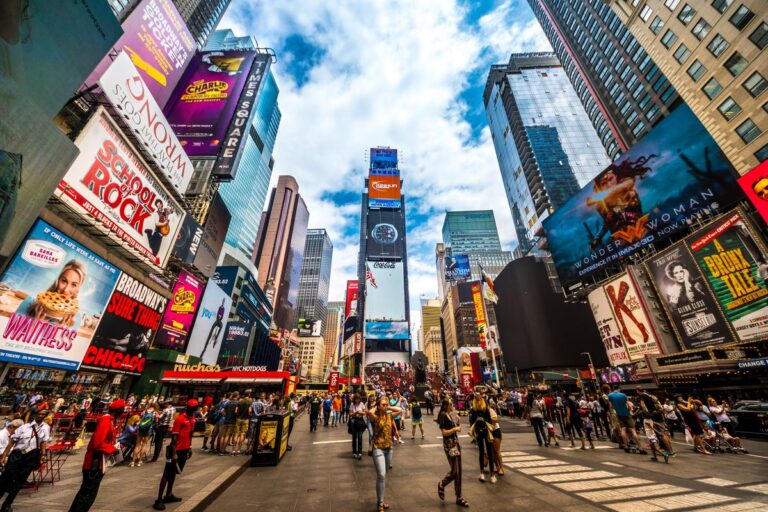
Before selecting a location, the professional should evaluate the “Environmental Noise Floor”—not just acoustically, but visually and socially. A location with high tourist density (e.g., mid-town Manhattan or the Las Vegas Strip) has a high noise floor that saps focus. A luxury bleisure spot prioritizes “Minimalist Inputs,” allowing the professional to control their external stimuli.
3. The “Sunk-Cost Leverage” Model
This framework views the business portion of the trip as the “Sunk Cost” (the flight and the initial hotel nights). The “Luxury” is found in leveraging that sunk cost to extend the stay into a personal weekend, effectively lowering the “Per-Restorative-Hour” cost of the primary aviation expenditure.
Key Categories and Modalities of Blended Living
Identifying the luxury bleisure lifestyle in the USA requires matching the “Work-Type” to the “Environment-DNA.”
| Category | Primary Strategic Lever | Key Trade-off | Representative Node |
| High-Altitude Tech | Cognitive clarity; “Thin Air” focus | Altitude Fatigue/Hydration | Aspen, CO; Salt Lake City |
| Maritime Maritime | Sensory reset; Blue-space therapy | Seasonal volatility | Charleston, SC; Newport, RI |
| Desert Modernist | Visual minimalism; Zero distraction | Extreme heat constraints | Scottsdale, AZ; Palm Springs |
| The Urban Pivot | High networking; service density | High noise floor; high burn rate | Austin, TX; Nashville, TN |
| Agricultural Enclave | Sustainability: Long-term vision | Slower transit; isolated | Napa, CA; Hudson Valley, NY |
Decision Logic: Matching Output to Environment
-
Deep Work (Writing/Coding): Best served by “The Forest Enclave” or “Desert Modernist” where external stimuli are low and consistent.
-
Collaborative Sprints: Best served by “The Urban Pivot” or “High-Altitude Tech,” where proximity to other hubs allows for “In-Person” overlap if needed.
-
Strategic Renewal (Planning): Best served by “Agricultural Enclaves” where the aesthetic environment encourages “Long-View” thinking and ethical reflection.
Detailed Real-World Scenarios and Decision Logic
The “East-West” Time Zone Arbitrage
A New York-based private equity partner takes a 10-day stay in Santa Barbara, California.
-
The Logic: By working on EST hours (5:00 AM – 1:00 PM local time), the partner finishes their professional day by early afternoon.
-
The Decision Point: They choose a property with a dedicated “Quiet-Zone” for early morning global calls, ensuring they don’t disturb the leisure environment.
-
Outcome: High professional output and four hours of daily daylight for Pacific surfing or coastal hiking, leading to a profound “Biometric Reset.”
The “High-Burn” Hub vs. “Value Node”
A consultant chooses between a stay in Miami and one in Savannah, Georgia.
-
The Conflict: Miami offershigh networkingi, ng but Savannah offers a significantly lower “Environmental Noise Floor” and more authentic cultural restoration.
-
The Decision: Savannah is chosen for a “Deep Work” sprint, as the lower “Ground-Level Burn” allows for a longer stay in a historic estate with private fiber connectivity.
Planning, Cost, and Resource Dynamics
The “Fiscal Integrity” of a luxury bleisure trip depends on distinguishing between “Direct Corporate Expenses” and “Personal Lifestyle Enhancements.”
2026 Luxury Bleisure Budgetary Mapping (Averages)
| Expense Category | Business-Only (3 Days) | Extended Bleisure (7 Days) | Elite Sovereign (14 Days) |
| Housing (Executive) | $1,500 | $4,500 | $12,000+ |
| Connectivity/Power | Included | $300 (Redundant) | $1,000 (Private) |
| Ground Burn (Food/Transport) | $600 | $1,500 | $4,000 |
| Restoration (Spa/Guide) | $0 | $1,000 | $3,500 |
Tools, Strategies, and Support Systems

To sustain the luxury bleisure lifestyle usa, professionals should deploy a “Mobility Stack” designed for enterprise-grade resilience:
-
Redundant Data Paths: Utilizing local fiber paired with a dedicated 6G hotspot and satellite-failover for mission-critical video.
-
Acoustic Management: Using active noise-canceling peripherals and portable “Acoustic Shields” to create a private office environment in semi-private clubs.
-
Split-Folio Automation: Utilizing hotel apps that allow the traveler to pre-assign charges to different credit cards based on the date or the service category.
-
“Shadow-Fare” Documentation: Recording the price of a “Business-Only” itinerary at the time of booking to prove that personal extensions did not increase the employer’s cost.
-
Ergonomic “Fly-Away” Kits: Lightweight, foldable laptop stands and mechanical keyboards that ensure “Desk Health” regardless of the furniture provided.
-
Circadian Lighting Tools: Portable biophilic lights that help the professional stay alert during “Out-of-Sync” morning calls.
-
VPN-Hardened Routers: Travel routers that provide a pre-encrypted “Safe-Bubble” for all devices, essential for maintaining corporate security in public networks.
Risk Landscape and Taxonomy of Failure Modes
-
“Infrastructure Collapse”: Relying on a single source of internet in a “Remote” luxury villa that has not been verified for professional use.
-
“Boundary Dissolution”: When the beauty of the location leads to “Work-Creep,” where the lack of a physical office makes it impossible to “leave” work, destroying the leisure value.
-
“The Compliance Cliff”: Failing to account for “State-Line Tax Nexus.” In some U.S. states, working more than 14-30 days can trigger personal income tax liabilities for the individual and payroll liabilities for the firm.
-
“Cultural Friction”: Selecting a destination (e.g., a “party” hub) when the goal was “Deep Work,” leading to a high “Environmental Noise Floor” and professional frustration.
Governance, Maintenance, and Long-Term Adaptation
Maintaining this lifestyle requires a “Review Cycle” to ensure the geography is still serving the professional’s output.
-
The “Post-Stay Audit”: Evaluating if the destination delivered on its “Restoration” promise. Did the Wi-Fi hold? Was the noise level acceptable?
-
Layered Compliance Checklist:
-
Has the “Bandwidth Stress-Test” been confirmed via local logs?
-
Is the time-zone overlap compatible with “Prime-Time” meetings?
-
Is the local “Third-Place Density” sufficient for social restoration?
-
Have the tax implications of the stay-length been verified?
-
Measurement, Tracking, and Evaluation
-
Leading Indicators: “Mbps Stability”; “Distance to Green/Blue Space”; “Availability of soundproofed breakout spaces.”
-
Lagging Indicators: “Output per hour vs. Home Base”; “Self-reported Burnout Score post-trip”; “Total sleep quality (via wearable data).”
-
Documentation Examples:
-
The “Bifurcated Ledger”: A clear separation of spend by date and purpose.
-
The “Restoration Log”: A record of which environmental stimuli (e.g., hiking vs. museums) led to the highest creative yield.
-
Common Misconceptions and Oversimplifications
-
“It’s just a tax-deductible vacation”: False. Purpose determines tax deductibility. If the “Business Purpose” is not the primary anchor, the entire trip may be deemed personal by the IRS.
-
“Any luxury hotel is bleisure-ready”: False. Many luxury hotels prioritize “Atmosphere” over “Ergonomics.”
-
“It’s for junior nomads”: False. The highest-growth cohort in the U.S. bleisure sector is C-suite executives and senior partners aged 45-65.
-
“Wi-Fi is enough”: False. Professional-grade work requires latency stability, security tunnels, and redundant power—things standard Wi-Fi cannot guarantee.
-
“You’ll save money”: False. A high-quality bleisure setup is often more expensive than a home-based period due to “Ground Burn” and premium housing.
-
“The lobby is the office”: False. High-level professionals demand privacy and acoustic isolation, which hotel lobbies cannot provide.
Ethical and Contextual Considerations
The pursuit of the luxury bleisure lifestyle usa must be balanced with “Community Stewardship.” The influx of high-income professionals into smaller, “lifestyle” towns (like those in Vermont or the mountain towns of Idaho) has led to significant inflationary pressure on local housing. The intellectually honest professional acknowledges this “Externalized Cost.” Ethical bleisure in 2026 involves staying in “Managed Assets” built for transients rather than competing for local long-term housing, and actively contributing to the local “Ground-Level Economy” through direct spending rather than reliance on global delivery apps.
Conclusion
The architecture of the luxury bleisure lifestyle in the USA is ultimately a testament to the “Sovereignty of the Knowledge Worker.” In 2026, the destinations that thrive are those that solve for the total human, not just the producer or the consumer. Whether it is the cognitive clarity found in the high deserts of the Southwest or the maritime focus of the North Atlantic, the goal remains the same: to find a geography that amplifies one’s professional frequency while offering a profound personal reset. A successful bleisure strategy is not about escaping work; it is about building a life where work and restoration are in a state of productive synergy.