Luxury Bleisure Apartments USA: The 2026 Definitive Reference
The landscape of American residential real estate has reached a pivotal juncture where the traditional “corporate housing” model has been rendered obsolete by the demands of a high-performance, untethered workforce. By 2026, the temporary residence is no longer merely a place to sleep between meetings; it is a meticulously engineered environment designed to sustain both professional output and personal well-being. This shift toward a sophisticated, integrated living model is driven by a demographic that views geographic flexibility as a strategic advantage rather than a nomadic novelty.
The primary challenge in this sector is the gap between marketing rhetoric and operational reality. Many developments claim “bleisure” status by simply offering a shared workspace in the lobby or high-speed internet in the units. However, for the senior professional, true utility is found in “Infrastructure Integrity,” the presence of acoustic dampening, enterprise-grade security protocols, and ergonomic furniture that exceeds the standards of a primary headquarters. Identifying the premier assets within this category requires a forensic understanding of how these spaces solve the “Cognitive Drag” associated with travel and transient living.
As the distributed leadership model matures, the choice of a temporary residence has become a core component of executive performance management. We are seeing a move toward “Integrated Managed Assets” that combine the privacy of a residential apartment with the service layer of a five-star hotel. This editorial analysis serves as the definitive reference for understanding the structural and systemic drivers of luxury bleisure apartments usa, moving past surface-level aesthetics toward a rigorous framework for environmental selection and professional optimization.
Understanding “luxury bleisure apartments usa”
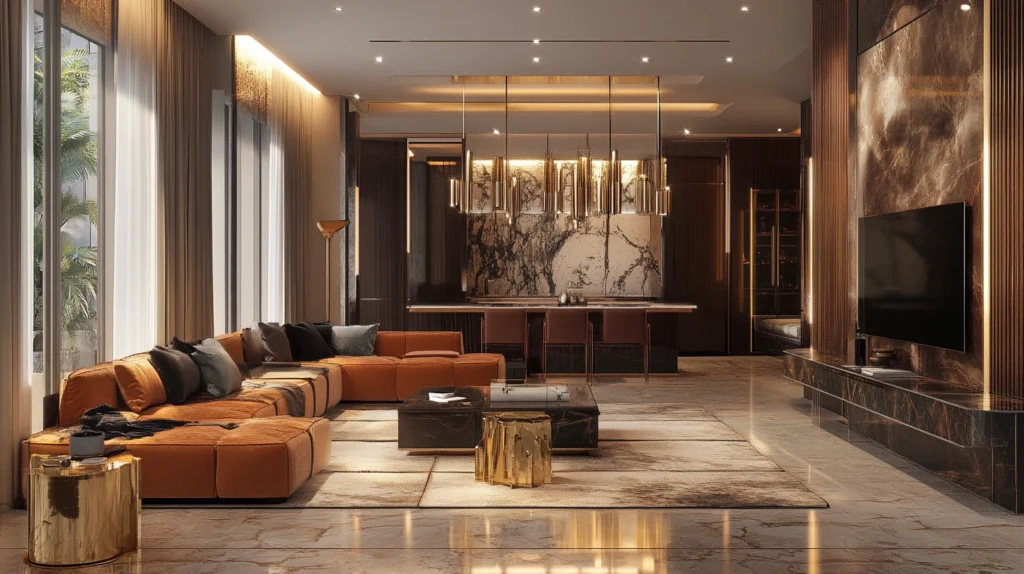
To fundamentally grasp the value proposition of luxury bleisure apartments, one must look beyond the “furnished apartment” archetype. This asset class represents a “Sovereign Productivity Node,” a space where the inhabitant can oscillate between high-stakes strategic sessions and deep restorative periods without leaving their private perimeter.
Multi-Perspective Explanation
From an Infrastructure Perspective, excellence is defined by “Professional Redundancy.” This includes private, air-gapped fiber optic lines, soundproofed “Zoom alcoves,” and smart-home systems that allow for precise control over the “Atmospheric Load” (lighting, temperature, and CO2 levels). In the 2026 American market, the baseline expectation for a luxury unit includes a height-adjustable desk and a certified ergonomic chair, effectively removing the physical “wear and tear” of mobile work.
From a Psychological Perspective, these units provide “Environmental Continuity.” The goal is to minimize the “Cognitive Load” of moving between cities. By standardizing the interface of the apartment using the same high-end kitchen appliances, identical connectivity protocols, and a similar aesthetic palette,s the professional can enter a new city and be fully operational within thirty minutes of arrival.
From a Service Perspective, the model is “Anticipatory rather than Reactive.” Luxury bleisure apartments increasingly offer “Unseen Facilitation,” such as pantry-stocking based on nutritional profiles, on-demand ergonomic adjustments, and secure document handling. This removes the logistical friction of daily life, freeing up cognitive bandwidth for professional tasks.
Oversimplification Risks
A common error is the “Amenity Falla,cy” assuming that a building with a gym and a rooftop lounge is a bleisure asset. True luxury in this sector is “Zonal Privacy.” A shared coworking space in a building lobby is often a liability for the senior professional due to acoustic bleed and security risks. The unit itself must be the primary workstation. Another risk is “Technical Optimism,” where a traveler assumes that “high-speed Wi-Fi” can handle the packet-loss requirements of a live-streamed keynote or a secure financial transaction.
Deep Contextual Background: The Evolution of Managed Living
The American trajectory of transient housing has followed a “Linear-to-Modular” evolution. The Legacy Era (1990–2019) was dominated by “Corporate Housing” beige, uninspired units that were functional but psychologically taxing for long-term stays. The Transition Era (2020–2024) saw the rise of the “Apart-hotel,” which combined hotel services with apartment layouts but often lacked the technical backbone for high-stakes work.
By 2026, will we have entered the Era of the Sovereign Unit? This period is defined by “Institutional Resilience” and “Biophilic Design.” Modern luxury bleisure apartments are now engineered with the same level of technical scrutiny as a Manhattan trading floor. This evolution reflects a broader systemic understanding that the home is no longer a retreat from work, but the primary site of professional value creation. Cities like Austin, Miami, and Denver have become the testing grounds for these developments, as they attract the highest concentration of mobile leadership talent.
Conceptual Frameworks and Mental Models
To select the ideal environment, professionals should apply these three core frameworks.
1. The “Acoustic Sovereignty” Model
This framework evaluates a unit by its “Sound-Floor.” It measures the physical decibel level during peak hours and the “Isolation Index” between rooms. For a bleisure asset to be viable, it must guarantee that a video conference in the living area cannot be heard in the sleeping area, allowing for true “Work-Life Compartmentalization.”
2. The “Frictionless Onboarding” Heuristic
Evaluate an apartment by the time it takes to go from “Door-Open” to “Deep-Work.” If the professional has to configure Wi-Fi, hunt for power outlets, or wait for a grocery delivery, the unit is a low-yield asset. A premier apartment has a “Time-to-Output” of less than fifteen minutes.
3. The “Gigabit-to-Glow” Index
This heuristic measures the physical distance between a gigabit-speed workstation and a “Wellness Anchor” (a park, a high-end spa, or a coastal path). The higher the index, the easier it is to engage in “Micro-Restoration” during the workday, which is essential for maintaining analytical precision over multi-week stays.
Key Categories and Modalities of Hybrid Units
| Category | Primary Strategic Objective | Key Trade-off | Representative Cities |
| The Urban High-Rise | High connectivity; networking density. | High noise floor; limited green space. | NYC, Chicago, Austin |
| The Wellness Enclave | Bio-metric reset; restoration. | Lower transit speed; premium cost. | Miami, Scottsdale, San Diego |
| The Tech Oasis | Infrastructure redundancy; deep work. | Aesthetic minimalism; often “sterile.” | Seattle, Denver, San Francisco |
| The Maritime Pivot | Sensory reset; blue-space therapy. | Seasonal volatility; humidity issues. | Charleston, Portland (ME) |
| The Cultural Anchor | Inspiration; sensory depth. | Legacy infrastructure risks. | New Orleans, Nashville, Savannah |
Detailed Real-World Scenarios and Decision Logic
The “Post-IPO Sprint”
A CFO needs to manage a 60-day quiet period from a neutral location.
-
The Decision Logic: Privacy is the primary constraint. They chose an Urban High-Rise in Dallas with private elevator access and air-gapped fiber.
-
Rational: The “Zonal Privacy” of a high-end managed apartment allows for the handling of confidential documents without the social “Guest Leakage” of a luxury hotel lobby.
-
Failure Mode: Selecting a property with shared workspaces that increase the risk of accidental information disclosure.
The “Biometric Reset” Stay
A creative director has just finished a six-month project and needs to maintain daily operations while recovering from burnout.
-
The Decision Logic: Restoration is the primary constraint. They chose Wellness Enclave in Scottsdale.
-
RaRationaleThe “Gigabit-to-Glow” index is extremely high. They can work for four hours in a circadian-lit study and then walk directly into a high-desert trail.
-
Outcome: Higher creative yield during work hours and a profound decrease in cortisol markers.
Planning, Cost, and Resource Dynamics
The “Total Cost of Residency” (TCR) includes significant indirect costs related to productivity and technical failure.
Executive Apartment Resource Mapping (2026 Projections)
| Tier | Monthly Rate | Tech Infrastructure | Service Layer |
| Premium Managed | $6,000 – $10,000 | Standard High-Speed | Weekly Housekeeping |
| Luxury Bleisure | $12,000 – $22,000 | Redundant Fiber; Ergo-Kit | Daily “Invisible” Service |
| Sovereign Estate | $30,000+ | Air-Gapped; Satellite Failover | Full-Stack Bespoke |
Tools, Strategies, and Support Systems
To maximize the output of luxury bleisure apartments usa, residents should deploy a specific “Mobility Stack”:
-
Hardware-Level Encryption: Utilizing travel routers that create a secure tunnel for all devices before they touch the building’s network.
-
Acoustic Masking Tools: Portable “White-Noise” machines that are calibrated to the specific frequencies of urban traffic.
-
Circadian Lighting Packs: Portable “Sky-Lights” that can be used to override the apartment’s existing lighting for high-focus tasks.
-
“Shadow-Fare” Documentation: Keeping a record of the price of a standard corporate hotel vs. the bleisure apartment to justify the ROI to procurement.
-
Geofenced Grocery Profiles: Utilizing apps that pre-load nutritional requirements to local delivery services before the guest arrives.
-
“Virtual Desk” Presets: Storing digital workspace layouts in the cloud so monitors and peripherals “handshake” instantly with a new laptop.
Risk Landscape and Taxonomy of Failure Modes
-
“The Connectivity Cliff”: Relying on a property that has “fiber” to the building but outdated “Cat-5” wiring to the individual unit.
-
“The Boundary Dissolution”: When the apartment is too comfortable, leading to “Work-Creep,” where the inhabitant never truly “leaves” their desk.
-
“The Compliance Gap”: Working more than 30 days in certain states (like California or New York) can trigger complex tax nexus issues for the individual’s employer.
-
“The Infrastructure Shadow”: Selecting a unit near a construction site or high-traffic corridor that renders “Acoustic Sovereignty” impossible.
Governance, Maintenance, and Long-Term Adaptation
A successful bleisure strategy requires a “Layered Review Cycle.”
-
The “First-Hour Audit”: Testing the actual upload/download speeds and latency under a VPN load immediately upon arrival.
-
The “Circadian Calibration”: Adjusting the unit’s lighting and temperature to match the user’s primary work zone.
-
Checklist for 2026 Selection:
-
Verified upload speed > 100Mbps (Symmetrical)?
-
Presence of an adjustable-height desk?
-
Acoustic isolation from neighboring units > 50dB?
-
Walkable access to “restorative” green/blue space < 10 mins?
-
Measurement, Tracking, and Evaluation
-
Leading Indicators: “Time-to-Output”; “Network Latency Stability”; “Ambient Decibel Levels.”
-
Lagging Indicators: “Output Quality per Hour”; “Post-Stay Recovery Score”; “Strategic Adherence.”
-
Documentation Examples:
-
The “Technical Fail-Log”: Tracking any network drops or power surges.
-
The “Environment-Yield Report”: Evaluating how the specific layout of the apartment affected the speed of complex decision-making.
-
Common Misconceptions and Oversimplifications
-
“It’s just an expensive Airbnb”: False. Professional assets have “Enterprise-Grade” security and liability insurance that residential rentals lack.
-
“Wi-Fi is enough”: False. Professional-grade work requires latency stability and packet-loss protection, often requiring hard-wired connections.
-
“Amenities matter most”: False. A luxury gym is useless if the apartment chair causes back pain after four hours.
-
“The lobby is a good backup”: False. Hotel or apartment lobbies are “Low-Security Zones” that are inappropriate for confidential professional work.
-
“You can work from the sofa”: False. Ergonomic failure is the primary driver of burnout in transient professionals.
-
“Service should be visible”: False. True luxury service in a bleisure context is “Invisible”—happening while the professional is away, without interruption.
Conclusion
The pursuit of the luxury bleisure lifestyle usa is an acknowledgment that the environment is a primary driver of professional performance. As the workforce continues to decentralize, the ability to find and maintain high-yield living environments will be a key differentiator for the modern executive. Success is found in the patience to select a space that does not just “house” the professional, but actively facilitates their greatest work. The ultimate bleisure apartment is not a destination; it is a tool for a more sustainable, high-performance career.