Best Urban Bleisure Spots United States: The 2026 Definitive Reference
The structural realignment of American professional life has reached a definitive stage where the “business trip” is no longer a discrete event but a modular component of a high-performance lifestyle. By 2026, the temporary relocation of an executive’s or consultant’s headquarters is a strategic deployment. This shift toward “Integrated Urban Residency” is driven by a demographic that demands an environment where the transition between a high-stakes strategic session and a restorative personal period is measured in meters rather than miles.
Identifying the most effective nodes for this integration requires a move away from standard travel industry metrics. While many destinations claim to offer a balance of work and play, few possess the structural integrity to support both enterprise-grade technical requirements and genuine cognitive restoration. A premier hub for these blended events must facilitate what sociologists call “Frictionless Transition,” the ability to shift from a high-stakes professional mindset to a restorative personal state without the logistical drag of heavy commuting or infrastructure failure.
As urban centers pivot to accommodate this transient but influential class of professionals, the criteria for selection have become increasingly forensic. We are no longer looking for cities that merely have a major airport and high-end dining. We are looking for “Systemic Nodes” geographies where the digital backbone, the culinary landscape, and the proximity to nature or culture are in a state of productive synergy. This editorial analysis serves as the definitive reference for architecting these mobility events, moving past surface-level tips toward a rigorous framework for geographic selection and professional optimization.
Understanding “best urban bleisure spots united states.”
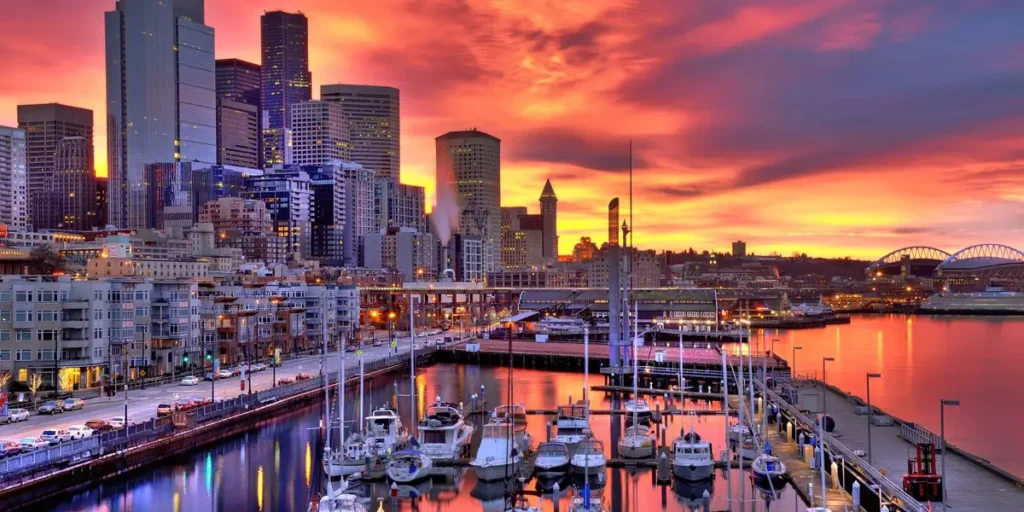
To fundamentally grasp the criteria for the best urban bleisure spots in the United States, one must look past the “business hotel” archetype. True excellence in this category is found in locations that offer “Infrastructure Invisibility,” where the quality of the professional support is so resilient it disappears, allowing the inhabitant to focus entirely on their output and their restoration.
Multi-Perspective Explanation
From an Infrastructure Perspective, a top-tier bleisure spot must solve for “Technical Redundancy.” This is not merely about Wi-Fi; it is about the presence of air-gapped security protocols, redundant high-speed fiber lines, and acoustic isolation that meets the standards of a professional recording studio. In cities like Austin or Seattle, this technical resilience is a baseline, allowing a professional to move from a downtown coworking hub to a suburban “retreat loft” without a degradation in security or bandwidth.
From a Cognitive Perspective, the destination must provide “Environmental Variety.” A professional who spends three days in high-intensity negotiations requires a profound sensory reset to justify the stay. This is why “Gigabit-to-Green” locations cities like Denver or Salt Lake City, consistently outperform their peers. The ability to transition from a boardroom to an alpine trail or a world-class park in under 20 minutes provides the “Attention Restoration” necessary to mitigate the cognitive load of the business week.
From an Administrative Perspective, the “Audit Trail” must be simplified. A premier bleisure spot is supported by a hospitality sector that understands “Split-Folio Billing” and provides clear, itemized documentation. This ensures that the transition from a corporate-funded Thursday to a personally funded Sunday is frictionless during the post-trip expense reconciliation process.
Oversimplification Risks
A common error in selecting a destination is equating “High Tourism” with “High Bleisure Value.” Many locations that dominate the tourism sector (such as certain parts of Las Vegas or Orlando) present significant “Operational Friction” for the solo professional. The high noise floor, the crowds, and the focus on mass-market entertainment can make deep work nearly impossible. Conversely, a purely “Business District” may offer world-class infrastructure but lack the cultural or natural depth required to make an extension worthwhile.
Contextual Background: The Evolution of the Professional Hub
The history of the American urban center as a professional destination has followed a trajectory from “Rigid Linearity” (1950–2010) to “Modular Sovereignty” in 2026. Historically, a business trip was a point-to-point event with a strictly defined start and end. The “Central Business District” (CBD) was a zone of work that became an “Acoustic Dead Zone” after 6:00 PM.
The first major pivot occurred with the “Creative Class” expansion (2011–2020), where cities began to realize that talent followed lifestyle. This led to the rise of “Secondary Market Hubs”—cities like Nashville and Portland—which began to attract professionals through cultural appeal. However, these cities often struggled with “Infrastructure Lag”—their growth outpaced their ability to provide the enterprise-grade services required by the C-suite.
By 2026, we will have entered the Era of the Integrated Node. The premier urban spots are now engineered destinations. We see the rise of the “15-Minute Professional City,” where an executive can live, work, and restore within a single, high-fidelity urban corridor. This period is defined by “Institutional Resilience,” where the city itself is engineered to support a workforce that is perpetually in motion but never “off the grid.”
Conceptual Frameworks and Mental Models
Strategic selection of an urban spot requires mental models that prioritize “Operational Continuity.”
1. The “Bandwidth-to-Bio” Ratio
This model measures the physical distance between a gigabit-speed workstation and a “Biological Reset” asset (a park, riverfront, or high-end wellness enclave). A top-tier ratio is under 10 minutes. If restoration requires significant transit logistics, the restorative value of the stay is halved by “Decision Fatigue.”
2. The “Cognitive Noise Floor” Heuristic
Evaluate an urban spot by the “Environmental Noise Floor”—not just acoustically, but visually and socially. An area with high tourist density or constant construction has a high noise floor that saps focus. A premier spot prioritizes “Input Minimalism” within the urban core.
3. The “Third-Place” Density Matrix
This framework looks for destinations with a high density of “Professional Third Places”—high-end cafes, library lounges, and boutique coworking hubs that are secure and quiet. This ensures the traveler can maintain a “Professional Ambient” even while away from their primary workstation.
Key Categories of American Bleisure Nodes
Identifying the right urban spot involves matching the traveler’s “Stay-Purpose” to the geography’s “Operational Strength.”
| Category | Primary Strategic Strength | Key Trade-off | Representative Cities |
| The Tech Powerhouse | High connectivity; peer density. | High noise floor; high cost. | Austin, Seattle, San Francisco |
| The Cultural Anchor | Profound sensory reset; arts/food. | Legacy infrastructure friction. | New Orleans, Savannah, Charleston |
| The Power Corridor | Networking: historical depth. | Social/Professional rigidity. | D.C., Boston, Philadelphia |
| The Sun & Scale Hub | Wellness focus: climate stability. | Potential tourist saturation. | San Diego, Scottsdale, Miami |
| The Mountain Gateway | “Soft Fascination”; deep focus. | Logistical isolation; transit lag. | Denver, Salt Lake City, Boise |
Detailed Real-World Scenarios and Decision Logic

The “Asynchronous” Time Zone Arbitrage
A New York-based partner at a law firm stays in San Francisco.
-
The Logic: Working from 6:00 AM to 2:00 PM local time aligns with the NYC workday.
-
The Action: By 2:00 PM, the partner is “offline” for their team but has four prime daylight hours for coastal cycling or networking in the Bay Area.
-
Failure Mode: Selecting a hotel with a loud “social lobby” that disrupts 6:00 AM calls.
The “Convention Straddle”
An executive attends a 3-day conference in Chicago.
-
The Conflict: The conference hotel is overstimulated and crowded.
-
The Decision: Stay on-site for the business mandate, but move to a quiet “Apart-hotel” in a residential-professional neighborhood like the West Loop for the 48-hour weekend extension.
-
Outcome: The professional resets in a high-walkability, high-culinary zone without the “Convention Fatigue.”
Planning, Cost, and Resource Dynamics
The economic yield of a bleisure stay is determined by the “Amortization of Transit.” By extending the stay, the traveler effectively lowers the “Per-Restorative-Hour” cost of the primary flight.
2026 Urban Bleisure Resource Mapping (Average Estimates)
| Resource Layer | Investment Type | Operational Risk | Primary Value |
| Managed Housing | $400 – $900 / night | Booking volatility. | Cognitive shelter. |
| Connectivity Kit | $200 – $500 (per stay) | Network latency. | Output reliability. |
| Nutrition (High-Tier) | $150 – $300 / day | Decision fatigue. | Metabolic stability. |
| Restoration (Services) | $200 – $600 / stay | Logistical drag. | Biometric recovery. |
Tools, Strategies, and Support Systems
To effectively navigate the best urban bleisure spots in the United States, travelers should deploy a specific “Lifestyle Stack”:
-
Split-Folio Billing Automation: Pre-assigning charges by date or category in hotel systems to separate business and personal spend at the source.
-
“Shadow-Fare” Documentation: Recording the price of a “Business-Only” itinerary at the time of booking to protect against audit challenges for extensions.
-
Coworking Reciprocity Memberships: Platforms that allow access to multiple U.S. cities under a single professional pass.
-
Geofenced Grocery Profiles: Pre-loading nutritional requirements to local delivery services before arrival.
-
VPN-Hardened Routers: Portable hardware that ensures a secure, encrypted tunnel regardless of the hotel’s network security.
-
“Nexus” Tracking Apps: Tools that log physical presence to prevent accidental tax residency triggers in aggressive jurisdictions.
Risk Landscape and Taxonomy of Failure Modes
-
“The Infrastructure Shadow”: Relying on a destination that looks “connected” on a map but suffers from local network congestion or “dead zones” in historic buildings.
-
“The Boundary Dissolution”: When the beauty of the location leads to “Work-Creep,” where the lack of a physical office makes it impossible to “leave” work, destroying the leisure value.
-
“The Policy Gap”: Most companies have a “Duty of Care” for the business portion, but the individual is often legally on their own for the extension.
-
“Acoustic Fragility”: Selecting a “luxury” property that prioritizes aesthetic design over soundproofing, rendering private calls impossible.
Governance, Maintenance, and Long-Term Adaptation
A successful bleisure program requires a “Review Cycle.”
-
The “Quarterly Geo-Review”: Travel markets shift rapidly. The “Value Hub” of 2025 may be the “Overpriced Trend” of 2026.
-
The “Post-Stay Audit”: Evaluating the actual “Time-to-Output” and “Restoration Yield” of the city.
-
Adaptation Checklist:
-
Did the local network sustain 100% uptime during peak hours?
-
Was the “Bandwidth-to-Bio” ratio under the 10-minute threshold?
-
Did the city’s transit system operate without “Logistical Surprises”?
-
Measurement, Tracking, and Evaluation
-
Leading Indicators: Coworking availability within 1 mile; average internet speeds > 200Mbps; presence of non-chain, high-quality nutrition.
-
Lagging Indicators: Total output during “remote” hours; recovery time post-trip (did the extension reduce the “return-to-work” drag?).
-
Documentation Examples:
-
The Technical Fail-Log: A record of any network drops to avoid that property in the future.
-
The Environment-Yield Report: Evaluating how the layout and location affected the speed of complex decision-making.
-
Common Misconceptions and Oversimplifications
-
“Any big city is a good bleisure spot”: False. Many have “Restoration Deserts” that make leisure difficult.
-
“Bleisure is for the weekends only”: False. The most effective bleisure occurs mid-week through “Asynchronous Windows.”
-
“If the flight price didn’t change, it’s free”: False. Tax authorities look at “Primary Purpose.”
-
“Airbnb is better for bleisure”: False. Managed “Sovereign Units” offer the security and predictable infrastructure that residential rentals lack.
-
“The lobby is the workspace”: False. High-level travelers demand privacy; the “Lobby-as-Office” is a legacy concept.
-
“Weather is a primary factor”: False. Climate is secondary to “Infrastructure Resilience.”
Conclusion
The map of the best urban bleisure spots united states is ultimately a map of human adaptability. In 2026, the cities that thrive are those that recognize the traveler is no longer a “visitor” but a “temporary resident.” Whether you find yourself in the tech-forward lofts of Austin or the historic courtyards of Charleston, the goal remains the same: to find a place where the professional mandate and the personal life are in a state of productive synergy. The definitive urban bleisure experience is not just a destination; it is a tool for a more sustainable, high-performance career.