Best Bleisure Cities in the US: The 2026 Definitive Reference
The professional geography of the United States has undergone a structural realignment, moving past the temporary “work-from-anywhere” experimentation of the early 2020s into a stabilized era of intentional mobility. By 2026, the concept of the “business trip” has been replaced by the “Strategic Integration,” a period where high-value human capital is deployed to specific urban nodes not just for proximity to clients, but for the specific “Environmental Yield” those cities provide. In this landscape, identifying the best bleisure cities in the US requires an analytical framework that prioritizes infrastructure resilience, cognitive restoration, and systemic efficiency over simple tourism metrics.
The maturity of the American bleisure market is evidenced by a shift in traveler intent. We are seeing a move away from the “incidental extension” adding a Sunday to a Friday meeting toward “Node-Based Residency.” In this model, cities are selected based on their ability to function as a high-bandwidth extension of the home office while simultaneously providing a friction-free transition into restorative leisure. This evolution is driven by a demographic that views geographic flexibility as a non-negotiable component of professional performance, where the city itself acts as a productivity tool.
However, the “bleisure” label has been co-opted by secondary markets that lack the technical backbone to support senior-level professional requirements. For the executive or consultant, a city’s value is not determined by its nightlife or its landmarks, but by its “Infrastructure Invisibility.” A premier bleisure hub must offer a state where the logistics of travel connectivity, transit, and security are so seamless that they disappear, leaving the professional with the mental bandwidth to engage in both deep work and genuine decompression. This editorial serves as the definitive architecture for navigating and selecting the premier American nodes for the modern integrated stay.
Understanding “best bleisure cities in the us”
To identify the best bleisure cities in the US, one must look beyond the standard “top destinations” lists populated by vacation-goers. In the professional context, a city is a “Platform-as-a-Service.” Its value is derived from how effectively it balances the competing demands of enterprise-grade reliability and high-tier lifestyle restoration.
Multi-Perspective Explanation
From an Operational Perspective, a top-tier bleisure city is defined by its “Redundant Connectivity.” This refers not only to 5G saturation and public fiber access but also to the reliability of its secondary systems: the speed of its airport-to-center transit, the density of its 24-hour services, and the availability of “Professional Sanctuaries,” third spaces that guarantee acoustic privacy and physical security. A city like Austin or Seattle excels here because its commercial infrastructure is built to the same standards as its tech-sector headquarters.
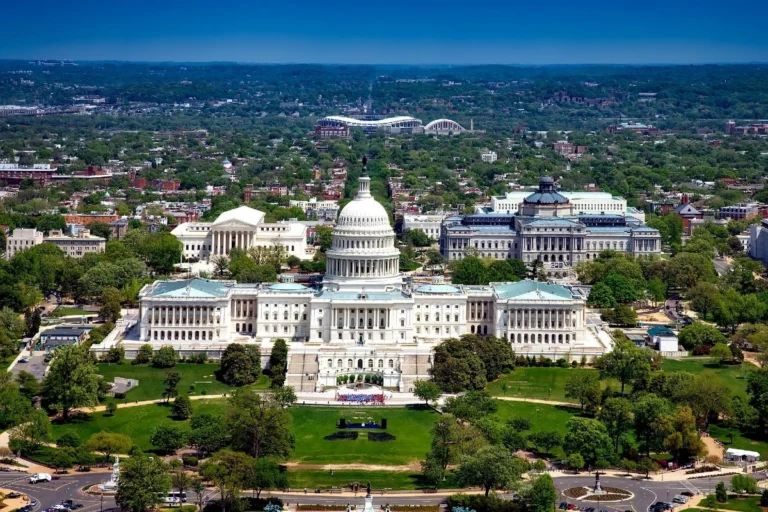
From a Psychological Perspective, excellence is measured by “Cognitive Friction.” A city with poor public transit or an opaque layout forces the traveler to spend mental energy on basic navigation. Conversely, a city like Chicago or Washington, D.C., with its highly structured grid and reliable transit layers, allows the professional to maintain “Flow State” throughout the day. The city acts as a low-drag environment where the transition from a client site to a restorative museum or park is physically and mentally effortless.
From a Socio-Economic Perspective, these cities function as “Knowledge Density Zones.” The value of staying in a bleisure hub often lies in the “Ambient Professionalism” of its environment. When the person at the next table is also managing a global team or a high-stakes merger, the city provides a subtle but critical sense of institutional alignment. This “Peer Proximity” is why cities like New York and San Francisco remain dominant despite the rise of lower-cost alternatives.
Oversimplification Risks
A common error is the “Amenity-Infrastructure Trap,” assuming that a city with great weather and restaurants is automatically a good bleisure destination. If the local cellular network collapses during peak hours, or if the “luxury” hotel district is situated in an acoustic dead-zone of heavy construction, the leisure benefits are negated by professional failure. Furthermore, the “Tourist-Professional Conflict” is a real risk; cities that are over-indexed for mass tourism, like Orlando, often lack the quiet, high-stakes environments required for senior-level deep work.
The Historical Pivot: From Corporate Hubs to Hybrid Nodes
The evolution of the American city as a professional destination has followed a “Concentrated-to-Distributed” trajectory. The Legacy Era (1950–2010) was dominated by the “Central Business District” (CBD). Travel was a binary event: you went to the CBD for work, and you went elsewhere for leisure. There was almost no overlap, and the infrastructure of the CBD was notoriously “dead” after 6:00 PM.
The Transition Era (2011–2023) saw the rise of the “Creative Class Hub,” where cities like Portland and Austin began to attract professionals through lifestyle appeal. However, these cities often struggled with “Infrastructure Lag”; their growth outpaced their ability to provide reliable professional services and transit, leading to a fragmented experience for the traveler.
By 2026, we will have entered the Era of the Integrated Node. The best bleisure cities in the US are now those that have successfully retrofitted their lifestyle assets with industrial-strength technology. We see the emergence of the “15-Minute Professional City,” where an executive can live, work, and restore within a single, high-fidelity urban corridor. This period is defined by “Institutional Resilience,” where the city itself is engineered to support a workforce that is perpetually in motion but never “off the grid.”
Conceptual Frameworks for Urban Selection
To evaluate an urban node, professionals should deploy these three mental models to ensure the city aligns with their specific “Output Requirements.”
1. The “Latency-to-Landscape” Index
This framework measures the physical time it takes to move from a high-speed digital workstation to a “Low-Stimulus Landscape” (a park, a riverfront, or a quiet library). In a premier bleisure city, this index is under 10 minutes. If restoration requires a 30-minute Uber ride, the city has a “High Restoration Tax” that undermines the bleisure intent.
2. The “Infrastructure Invisibility” Score
A city is evaluated by the number of times a traveler has to “solve” a problem. If the Wi-Fi is seamless, the transit is predictable, and the service is anticipatory, the score is high. A high score means the traveler’s “Decision Capital” is preserved for work rather than logistics.
3. The “Peer Density” Heuristic
This model assesses the likelihood of “Serendipitous Alignment.” In cities with high peer density, the leisure portion of the trip often yields professional value through informal networking. If the city’s social layer is purely recreational, it is a “Low-Yield” bleisure node.
Key Categories of American Bleisure Cities
| Category | Primary Strategic Advantage | Key Operational Trade-off | Representative Cities |
| The Tech Powerhouses | Redundant infrastructure; peer density. | High “Hustle-Noise”; cost premium. | Austin, Seattle, San Francisco |
| The Cultural Capitals | Deep restoration; high sensory yield. | Legacy infrastructure friction. | New Orleans, Charleston, Savannah |
| The Resilience Hubs | Predictability; systemic reliability. | Aesthetic “Corporate” feel. | Chicago, Charlotte, Minneapolis |
| The Wellness Enclaves | Biometric reset; climate stability. | Seasonal volatility; transit lag. | San Diego, Scottsdale, Miami |
| The Mountain Gateways | “Soft Fascination”; deep focus zones. | Logistical isolation; altitude drag. | Denver, Salt Lake City, Boise |
Detailed Real-World Scenarios and Decision Logic
The “Asynchronous Sprint”
A Boston-based strategy lead needs to oversee a product launch while managing early signs of burnout.
-
The Decision: They chose San Diego.
-
The Logic: By working East Coast hours (6:00 AM – 2:00 PM local time), they align with their home team. By 2:00 PM, they are “offline” with four hours of daylight left for coastal restoration.
-
Failure Mode: Selecting a city with a “Late-Start” culture where professional services (coffee, gyms, transit) aren’t active at 5:30 AM.
The “High-Stakes Secrecy” Stay
A legal team needs a neutral, high-security location for a sensitive 14-day negotiation.
-
The Decision: They chose Washington, D.C.
-
The Logic: The city is built for “Acoustic Sovereignty” and secure document handling. The leisure layer (museums, monuments) offers “Cognitive Distancing” without the social noise of a traditional vacation city.
-
Second-Order Effect: The formal nature of the city maintains a high professional “guardrail” for the team, preventing the focus-drift common in more casual destinations.
Planning, Cost, and Resource Dynamics
The “Total Cost of Urban Integration” (TCUI) must account for the premium paid for infrastructure reliability.
2026 Urban Resource Mapping (Estimated Daily Rates)
| City Tier | Managed Housing (Daily) | Fiber/Security Access | Restorative Services |
| Tier 1 (NYC/SF/Austin) | $450 – $900 | Integrated; High Redundancy | Premium; High Density |
| Tier 2 (Denver/Chicago) | $300 – $600 | Reliable; Secondary Options | Diverse; Accessible |
| Tier 3 (Boise/Charleston) | $200 – $450 | Variable; Single-Path Risks | Localized; Lower Density |
Tools, Strategies, and Support Systems
To maximize the output from the best bleisure cities in the US, travelers should utilize a specific “Urban Mobility Stack”:
-
Network Redundancy Kit: A 6G-capable hotspot paired with a travel VPN that creates a private, encrypted tunnel regardless of the city’s public infrastructure.
-
“Decision-Minimal” Food Profiles: Using local delivery apps with pre-loaded “Nutritional Presets” to eliminate the cognitive load of sourcing food in a new city.
-
Micromobility Subscriptions: Pre-activating city-specific bike or scooter accounts to bypass unpredictable surface traffic.
-
Acoustic “Safe-Zone” Maps: Using crowd-sourced data to identify the quietest hours for public libraries or hotel lounges for emergency calls.
-
Biometric Monitoring: Using wearables to track the “City-Stress” impact—monitoring if a specific urban node is actually improving or degrading sleep quality.
-
“Split-Expense” Automation: Using enterprise software that uses geofencing to automatically categorize expenses as “Business” or “Leisure” based on location and time.
Risk Landscape and Taxonomy of Failure Modes
-
“Infrastructure Oversubscription”: When a city hosts a major event (e.g., a massive tech conference), the local network and transit systems can collapse, rendering the “bleisure” stay a professional nightmare.
-
“The Restoration Tax”: Cities with poor walkability force the traveler into Ubers for every leisure activity, creating “Transit-Induced Stress” that negates the restorative intent.
-
“The Policy Gap”: Companies that lack a clear “Blended Mobility Policy” leave the traveler at risk for insurance or tax liabilities when staying in high-regulation states like California.
-
“Acoustic Fragility”: Selecting a “trendy” neighborhood that is prone to nighttime noise, leading to sleep deprivation and impaired professional judgment.
Governance, Maintenance, and Long-Term Adaptation
A successful urban strategy requires an “Iterative Review Cycle.” A city that was a “Best Choice” in 2024 may be downgraded in 2026 due to infrastructure decay or rising crime.
-
The “Post-Stay Audit”: Evaluating the actual “Time-to-Output” and “Restoration Yield” of the city.
-
Checklist for Urban Re-Selection:
-
Did the local network sustain 100% uptime during peak hours?
-
Was the “Latency-to-Landscape” under the 10-minute threshold?
-
Did the city’s transit system operate without “Logistical Surprises”?
-
Did the social environment provide professional “Peer Alignment”?
-
Measurement, Tracking, and Evaluation
-
Leading Indicators: “Average Transit Speed”; “Network Latency Stability”; “Air Quality Index (AQI).”
-
Lagging Indicators: “Deliverable Quality per Stay”; “Self-Reported Burnout Recovery”; “Strategic Decision Accuracy.”
-
Documentation Examples:
-
The “Urban Performance Log”: Tracking network speeds and transit delays in specific cities over multiple stays.
-
The “Cost-to-Yield Analysis”: Comparing the higher cost of a Tier 1 city against the increased professional output it facilitated.
-
Common Misconceptions and Oversimplifications
-
“The cheapest city is the best for bleisure”: False. Lower-cost cities often have “Hidden Infrastructure Taxes” (poor transit, spotty Wi-Fi) that cost more in lost time.
-
“Every tech city is a good bleisure node”: False. Some tech hubs are “Work-Only” deserts that offer zero restorative leisure.
-
“Weather is a primary factor”: False. Climate is secondary to “Infrastructure Resilience.” A rainy city with great transit is better than a sunny city with gridlock.
-
“Bleisure is for the weekends only”: False. The most effective bleisure occurs mid-week through “Asynchronous Windows.”
-
“Airbnb is better for bleisure”: False. Managed “Sovereign Units” offer the security and predictable infrastructure that residential rentals lack.
-
“Local immersion means being a tourist”: False. Professional immersion is about living as a “High-Functioning Local,” not a visitor.
-
“The CBD is always the safest bet”: False. Many modern “Innovation Districts” offer better infrastructure and lifestyle balance than legacy downtowns.
Ethical and Contextual Considerations
As the best bleisure cities in the US continue to attract a high-earning, transient workforce, the “Gentrification of Hospitality” becomes a critical concern. Professionals should prioritize staying in managed commercial assets (apart-hotels or serviced apartments) rather than utilizing short-term rentals that deplete local housing stock. Additionally, “Mindful Consumption” spending in local neighborhoods rather than relying on global “Dark Kitchen” delivery apps ensures the city’s cultural fabric remains intact for future stays.
Conclusion
The selection of an urban node for a blended stay is no longer a matter of preference; it is a matter of “Systemic Alignment.” The cities that define the 2026 American landscape are those that treat the professional as a stakeholder in their infrastructure. By applying a rigorous, analytical framework to urban selection, the modern executive can transform the city from a backdrop into a powerful catalyst for both their career and their well-being. The ultimate bleisure city is one where the professional is not a guest, but a seamlessly integrated participant in a high-performance ecosystem.