Top Bleisure Stays in America: The 2026 Definitive Reference
The reconfiguration of the American professional landscape has moved beyond the transitional phase of “remote-capable” into a permanent architecture of geographic flexibility. In the executive and high-level consulting sectors, the traditional boundary between the utilitarian business trip and the restorative personal retreat has dissolved. In its place is a sophisticated, integrated modality where the environment is not merely a work background, but a strategic catalyst for it. The choice of a destination now hinges on a property’s ability to provide “Infrastructure Invisibility,” a state where technical and logistical systems are so resilient that the traveler’s cognitive energy is entirely preserved for high-stakes decision-making and genuine restoration.
As we move deeper into 2026, the criteria for identifying premier locations have become increasingly forensic. We are no longer evaluating properties based on standard hospitality metrics like thread count or Michelin stars alone. Instead, the focus has shifted to “Systemic Nodes” geographies and specific assets that solve for the “Cognitive Drag” of transient living. A true high-performance stay must facilitate a seamless oscillation between a high-bandwidth boardroom session and a profound “Biometric Reset.” This requires a synthesis of enterprise-grade security, ergonomic integrity, and immediate access to restorative natural or cultural assets.
The proliferation of the “bleisure” label in marketing has, unfortunately, introduced significant noise into the market. Many properties claim readiness for this lifestyle by offering little more than a communal table in the lobby or a desk in the corner of a suite. For the senior professional, these “compromised spaces” are a liability. A definitive reference for the current landscape must move past surface-level travel aesthetics to examine the structural, fiscal, and psychological drivers that define a truly elite asset. This analysis explores the mental models, risk landscapes, and operational strategies required to master the modern blended stay.
Understanding “top bleisure stays in america”

To fundamentally define the top bleisure stays in America, one must look past the hospitality industry’s standard definitions. Excellence in this domain is a function of “Operational Symmetry,” where the quality of the professional infrastructure matches the depth of the leisure restoration.
Multi-Perspective Explanation
From a Technical Perspective, excellence is binary. A property either provides “Mission-Critical Continuity” including low-latency VPN tunneling, redundant power systems, and air-gapped security, or it does not. In the 2026 market, the baseline expectation for an elite stay has moved beyond standard Wi-Fi into private, encrypted mesh networks for each guest, ensuring that a high-definition video session in a remote lodge is as secure as one in a Manhattan headquarters.
From a Cognitive Perspective, these stays act as “Attention Restoration” mechanisms. They are situated in environments that provide “Soft Fascination,n” natural or cultural stimuli that allow the directed-attention mechanisms of the brain to recover without conscious effort. The luxury here is not the décor, but the “Distance to Nature,” where the transition from a high-stress negotiation to a restorative trail or coastal path is measured in minutes, not miles.
From a Social Perspective, the top stays function as “Peer Density Nodes.” These are locations where the “Third Place,ce” the lounge, the library, or the high-end coffeenclavec l, ave is populated by a peer group of similar professional status. This creates a “Professional Ambient” that prevents the isolation often associated with remote work while maintaining a veneer of institutional authority.
Oversimplification Risks
A common error in selecting a destination is the “Amenity Fallacy” assuming that a property with a great pool and a high-end restaurant is inherently good for work. In reality, properties designed purely for consumption often lack “AcousSovereigntyerei,gnty,” the ability to find a truly silent, professional-grade space for a 6:00 AM global call. Another risk is “Infrastructure Optimism,” where a traveler assumes that “high-speed internet” in a scenic resort can handle the packet-loss requirements of a live-streamed keynote or secure financial transactions.
Contextual Background: The Evolution of Blended Mobility
The trajectory of the American professional stay has followed a “Linear-to-Modular” evolution. The Legacy Era (1990–2019) was defined by “Rigid Linearity,” where business travel was a point-to-point event with a strictly defined end. Any deviation was viewed with suspicion by corporate procurement departments. The Transition Era (2020–2024) was characterized by “Reactive Distribution,” where professionals were forced into remote work without the supporting infrastructure, leading to high burnout rates and fragmented productivity.
By 2026, we will have entered the Era of the Integrated Sovereign. This period is defined by “Institutional Resilience” and the decentralization of the C-suite. Organizations now recognize that talent retention is inextricably linked to geographic flexibility. This has led to the rise of “Secondary Market Hubs” cities like Charleston, Austin, and Denver, which have developed luxury infrastructures specifically to attract high-value, transient professionals seeking a “Deep Work” environment paired with an authentic regional reset.
Conceptual Frameworks and Mental Models
To select among the potential options, professionals should apply these core frameworks to ensure their chosen environment supports their output.
1. The “Bandwidth-to-Bio” Ratio
This model evaluates a stay by the physical distance between a gigabit-speed workstation and a “Biological Reset” asset (forest, ocean, or park). A top-tier ratio is under five minutes. If the effort to reach nature requires significant logistics, the restorative value of the stay is halved.
2. The “Cognitive Load” Heuristic
Evaluate a stay by how many “Micro-Decisions” it removes from your day. Does the property have walkable, high-quality nutrition? Is the transit reliable? A stay that requires complex logistics for basic needs is a “high-drag” environment that saps professional focus.
3. The “Time-Zone Ergonomics” Model
This framework prioritizes “Asynchronous Advantage.” For example, an East Coast professional working from a West Coast stay creates a “Golden Window” in the morning for deep work while their team is busy, and a “Leisure Buffer” in the late afternoon for restoration.
Key Categories of U.S. Bleisure Assets
| Category | Primary Strategic Strength | Key Trade-off | Representative Cities |
| The Alpine Enclave | High “Soft Fascination”; deep focus. | Seasonal logistical complexity. | Aspen, CO; Park City, UT |
| The Maritime Pivot | Circadian reset; blue-space therapy. | High humidity; tech-wear risks. | Charleston, SC; San Diego, CA |
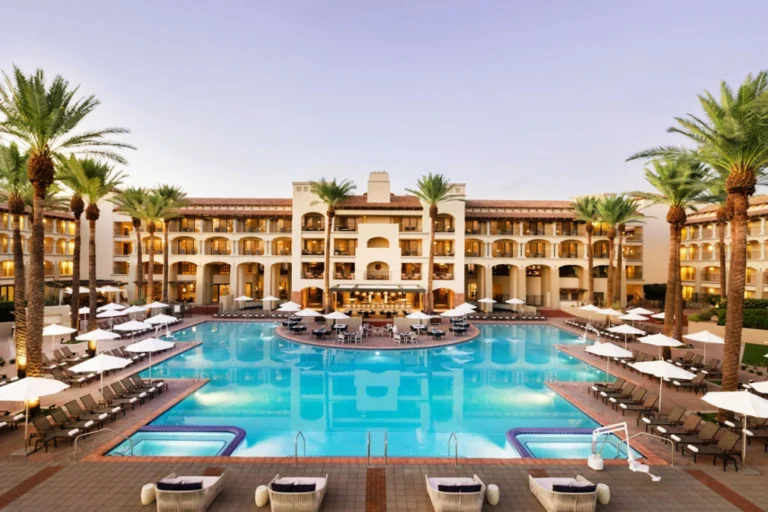
| The Desert Modernist | Visual minimalism; zero distraction. | Extreme heat windows. | Scottsdale, AZ; Palm Springs, CA |
| The Urban Micro-Node | High networking; service density. | High noise floor; high burn rate. | Austin, TX; Nashville, TN |
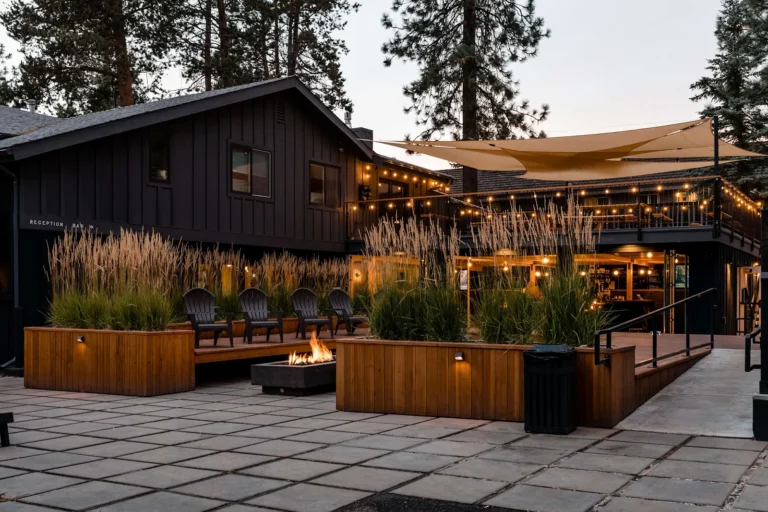
| The Forest Sanctuary | Isolation for deep output; privacy. | Potential connectivity lag. | Asheville, NC; Hudson Valley, NY |
Detailed Real-World Scenarios and Decision Logic
The “Post-Acquisition” Deep Sprint
A lead engineer needs to oversee a 30-day integration of two legacy systems.
-
The Logic: Privacy and focus are the primary constraints. They chose a Forest Sanctuary in the Catskills.
-
Decision Point: They prioritize a property with private satellite-failover internet to ensure 100% uptime during critical deployment windows.
-
Outcome: The isolation prevents “Meeting Creep” from the primary office, while the forest environment facilitates cognitive recovery during breaks.
The “East-West” Arbitrage
A New York-based partner at a law firm stays in San Francisco.
-
The Logic: Working from 6:00 AM to 2:00 PM local time aligns with the NYC workday.
-
Action: By 2:00 PM, the professional is “offline” for their team but has four prime daylight hours for coastal cycling or networking in the Bay Area.
-
Failure Mode: Attempting this in a hotel with a loud “social lobby” that disrupts the 6:00 AM calls.
Planning, Cost, and Resource Dynamics
The “Total Cost of a Bleisure Stay” (TCB) includes direct expenditures and the opportunity cost of potential technical failures.
2026 Bleisure Resource Mapping (Average Projections)
| Resource Layer | Investment Type | Operational Risk | Primary Value |
| Housing (Executive) | $600 – $1,200/night | Booking volatility. | Cognitive shelter. |
| Connectivity | $200 – $500/stay | Packet loss; Outages. | Output reliability. |
| Nutrition (High-Tier) | $150 – $300/day | Decision fatigue. | Metabolic stability. |
| Restoration (Services) | $200 – $600/stay | Travel friction. | Biometric reset. |
Tools, Strategies, and Support Systems
To effectively manage the top bleisure stays in aAmerica travelers should deploy a specific “Lifestyle Stack”:
-
Hardware-Level Encryption: Utilizing portable travel routers that create a secure, encrypted “bubble” for all devices, bypassing hotel-level security risks.
-
Acoustic Masking Tools: Professional-grade pink-noise generators or active noise-canceling peripherals to maintain “Acoustic Sovereignty” in semi-public spaces.
-
Ergonomic “Fly-Away” Kits: Lightweight, foldable laptop stands and mechanical keyboards that ensure physical health during 10-hour work blocks.
-
Split-Folio Automation: Leveraging hospitality apps that allow for instant segmentation of charges by date or category for corporate compliance.
-
“Shadow-Fare” Documentation: Keeping a record of what a “Business-Only” itinerary would have cost to protect against audit challenges for extended stays.
-
Circadian Lighting Packs: Portable biophilic lights that help the professional stay alert during early-morning global calls.
-
Redundant Data Paths: Pairing resort fiber with a dedicated 6G hotspot and a satellite-failover device for mission-critical sessions.
Risk Landscape and Taxonomy of Failure Modes
-
“Infrastructure Mirage”: A property advertising “high-speed internet” that actually collapses during peak hours when multiple guests attempt 4K video streams.
-
“The Boundary Dissolution”: When the beauty of the location leads to “Work-Creep,” where the lack of a physical office makes it impossible to “leave” work, destroying the leisure value.
-
“The Compliance Cliff”: Failing to account for “State-Line Tax Nexus.” Working more than 14–30 days in certain jurisdictions can trigger tax liabilities for the individual and the firm.
-
“Acoustic Leakage”: Selecting a “luxury” property that prioritizes aesthetic design over soundproofing, rendering private calls impossible due to thin walls.
Governance, Maintenance, and Long-Term Adaptation
A successful bleisure strategy requires a “Layered Review Cycle” to ensure the geography continues to serve the professional’s output.
-
The “First-Hour Audit”: Testing the actual upload/download speeds and latency under a VPN load immediately upon arrival.
-
The “Post-Stay Recovery Score”: Using wearable data to evaluate if the stay actually improved sleep quality and lowered cortisol levels compared to a home-based period.
-
Adaptation Checklist for 2026:
-
Does the property offer 100% fiber redundancy?
-
Is there an adjustable-height desk in the unit?
-
Is the “Restoration Anchor” (nature/culture) walkable?
-
Does the property understand split-folio billing?
-
Measurement, Tracking, and Evaluation
-
Leading Indicators: “Time-to-Deep-Work”; “Network Latency Stability”; “Ambient Decibel Levels.”
-
Lagging Indicators: “Output Quality per Hour”; “Self-Reported Burnout Score”; “Biometric Recovery Markers.”
-
Documentation Examples:
-
The Technical Fail-Log: A record of any network drops to avoid that property in the future.
-
The Environment-Yield Report: Evaluating how the specific layout and location affected the speed of complex decision-making.
-
Common Misconceptions and Oversimplifications
-
“It’s just a tax-deductible vacation”: False. Purpose determines tax status. If the “Business Purpose” is not the primary anchor, the entire trip may be deemed personal.
-
“Any luxury hotel is bleisure-ready”: False. Many prioritize “Atmosphere” over “Ergonomics.”
-
“Wi-Fi is enough”: False. Professional-grade work requires latency stability and packet-loss protection, often requiring hard-wired connections.
-
“The lobby is a good backup”: False. Hotel lobbies are low-security zones inappropriate for confidential professional work.
-
“You can work from the sofa”: False. Ergonomic failure is the primary driver of physical burnout in transient professionals.
-
“Service should be visible”: False. True luxury in a bleisure context is “Invisible Service”—happening while the professional is away, without interruption.
Ethical and Practical Considerations
In the pursuit of the top bleisure stays in America, professionals must be mindful of their impact on local “Lifestyle Hubs.” The influx of high-income transients into smaller markets (like Asheville or Boise) can drive local inflation. Ethical bleisure in 2026 involves utilizing managed hospitality assets rather than competing for long-term local housing, and actively contributing to the local “Ground-Level Economy” through direct spending rather than reliance on global delivery apps.
Conclusion
The architecture of a premier professional stay is ultimately a testament to the “Sovereignty of the High-Value Worker.” In 2026, the destinations that thrive are those that solve for the total human, providing the ironclad digital infrastructure of a skyscraper with the soul-nourishing environment of a national park. Success in this modality is not about escaping work; it is about building a professional life where work and restoration are no longer in competition, but in a state of productive synergy.