Luxury Business Retreats USA: The 2026 Definitive Reference
The institutionalization of executive off-sites has transitioned from simple boardroom excursions to a sophisticated discipline of high-stakes environmental engineering. As the distributed workforce model matures in 2026, the physical gathering of leadership is no longer a routine occurrence but a strategic intervention. In this climate, the demand for environments that catalyze breakthrough thinking while providing restorative luxury has created a distinct asset class. These are venues designed to solve the “Friction of Co-Presence,” the logistical and psychological barriers that prevent high-performing teams from reaching a state of collective flow.
The modern retreat is no longer a vacation with a morning seminar; it is a meticulously calibrated ecosystem where the architectural aesthetic, technical infrastructure, and culinary programming are all aligned toward a single professional objective. Whether the goal is radical restructuring, long-range strategic planning, or cultural recalibration, the choice of venue acts as a silent facilitator. In the United States, this has led to the emergence of “Purpose-Built Seclusion,” where properties in the American West, the Hudson Valley, and the coastal South have pivoted their entire operational models to support the nuance of executive discourse.
Securing a high-yield outcome from these gatherings requires a departure from traditional hospitality metrics. For the senior editorial strategist or corporate planner, the evaluation of a venue must move beyond room counts and square footage toward “Conversational Resilience,” the ability of a space to sustain intense, difficult, and creative dialogue over multiple days. This involves everything from acoustic dampening in breakout areas to the bio-dynamic lighting of plenary rooms. This analysis serves as the definitive reference for architecting such events, providing a rigorous framework for navigating the premium retreat landscape in America.
Understanding “luxury business retreats usa”
To fundamentally grasp the value proposition of luxury business retreats in the USA, one must decouple the “luxury” from mere opulence. In a professional context, luxury is redefined as the total removal of logistical friction. It is the provision of an environment where the physical needs of the participants are so perfectly anticipated that 100% of their cognitive bandwidth is available for the task at hand.
Multi-Perspective Explanation
From an Organizational Psychology Perspective, a luxury retreat is a “Liminal Space.” By removing leaders from their daily operational context and placing them in a high-value, unfamiliar environment, the property helps break down established hierarchical patterns. The physical beauty and isolation of a desert enclave or a mountain lodge serve as a cognitive “pattern interrupt,” making participants more receptive to new ideas and difficult feedback.
From a Technical Infrastructure Perspective, excellence is defined by “Professional Redundancy.” A premier retreat venue provides an invisible command center: encrypted mesh networks, multi-modal breakout spaces with integrated digital whiteboards, and on-site technical support that operates with the discretion of a butler. In 2026, the baseline expectation includes high-fidelity telepresence capabilities to bridge in global stakeholders who cannot travel.
From a Physiological Perspective, the environment is a tool for “Energy Management.” Unlike traditional hotels, a high-end retreat center designs its menus to avoid post-lunch glycemic crashes and uses circadian lighting to keep participants alert during strategic sessions. The goal is to maximize the “High-Cognitive-Yield” hours of the day.
Oversimplification Risks
A common error is the “Resort Fallacy,” assuming that a five-star hotel with a ballroom is a retreat venue. Business retreats require “Zonal Privacy.” A resort filled with families and leisure travelers creates a cognitive “Noise Floor” that undermines the gravity of professional discussions. True luxury in this sector is the ability to guarantee that the CEO of a competitor is not sitting at the next table during a confidential lunch.
Contextual Background: The Evolution of Leadership Environments
The American business retreat has traveled through three distinct epochs. The Legacy Era (1980–2005) was characterized by “Country Club Diplomacy,” where golf and steakhouse dinners were the primary vehicles for bonding. The environment was incidental to the social hierarchy. The Functional Era (2006–2020) shifted toward “Optimization,” with a focus on spreadsheet-driven outcomes and sterile conference centers that prioritized utility over inspiration.
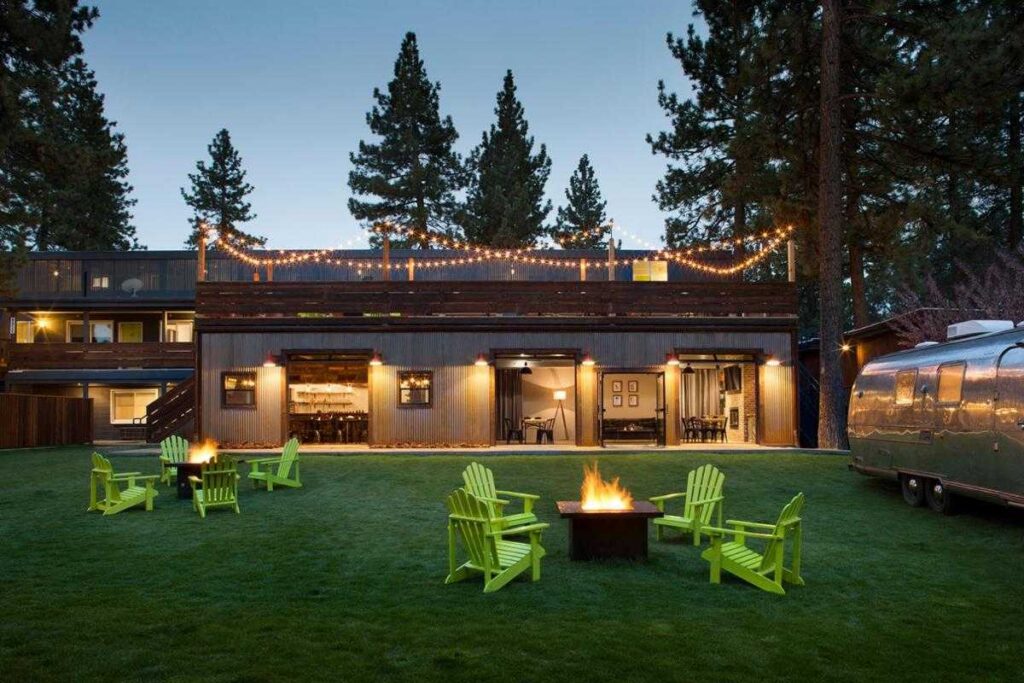
By 2026, we will have entered the Era of Integrated Experience. This period is defined by “Biophilic Design” and “Psychological Safety.” Modern venues are now built into the landscape, using natural light and organic materials to lower cortisol levels among participants. The rise of the “Chief People Officer” as a primary decision-maker for these events has shifted the focus from “What will we do?” to “How will the environment make us think?” This evolution reflects a broader systemic understanding that the quality of a decision is inextricably linked to the environment in which it was made.
Conceptual Frameworks and Mental Models
Strategic retreat planning requires mental models that prioritize “Outcome Architecture” over “Logistical Comfort.”
1. The “Signal-to-Noise” Model
This framework evaluates a venue based on its ability to amplify the professional “Signal” (the core objective) while dampening the “Noise” (distractions, travel fatigue, logistical friction). A top-tier retreat increases the Signal-to-Noise ratio by providing total sequestration.
2. The “Restorative-Focus” Paradox
This posits that the intensity of a strategic session is directly supported by the depth of the restorative periods. A venue that offers world-class spa or nature access is not “distracting” from the work; it is providing the necessary recovery for the next high-stakes session.
3. The “Seclusion-to-Scale” Matrix
This model weighs the group size against the level of required isolation. For C-Suite “War Rooms,” total isolation (private villas) is mandatory. For mid-management “Alignment Summits,” a “Controlled Social Node” (a boutique hotel with dedicated wings) is more effective for building cross-departmental bridges.
Key Categories of Retreat Modalities and Trade-offs
Identifying the right property involves matching the “Retreat Intent” to the property’s “Environmental DNA.”
| Category | Primary Strategic Objective | Trade-off | Key U.S. Region |
| Wilderness Enclaves | Radical Innovation / Deep Work | Logistical complexity/Travel time | Montana, Wyoming |
| Desert Modernist | Strategic Planning / Minimalism | Environmental intensity (Heat) | Arizona, Utah |
| Coastal Sanctuaries | Cultural Alignment / Empathy | High public visibility potential | California, South Carolina |
| Agricultural Retreats | Sustainability / Long-term Vision | Slower operational pace | Hudson Valley, Napa |
| Urban Power-Nodes | High-Velocity Deal-Making | High cognitive noise floor | NYC, Chicago, Austin |
Detailed Real-World Scenarios and Decision Logic
The “Post-Merger Integration” (PMI)
A multi-national firm has just completed an acquisition. The two leadership teams are culturally mismatched and defensive.
-
The Decision Logic: An urban hub is too distracting; a wilderness enclave is too isolating. The team selects an Agricultural Retreat in Virginia.
-
The Rationale: The shared “Farm-to-Table” dining and soft natural landscape provide a neutral, grounding environment that encourages informal dialogue over shared activities.
-
Failure Mode: Selecting a high-pressure “Power-Node” hotel that reinforces existing hierarchies.
The “Crisis Strategic Pivot”
A tech firm’s core product has been disrupted by a new regulatory framework. They have 72 hours to decide on a multi-billion-dollar pivot.
-
The Decision Logic: The team requires Wilderness Enclaves in the Rockies.
-
The Rationale: Total sequestration. No external guests, no family, and absolute technical redundancy. The physical grandeur of the mountains provides the necessary “Long-View” perspective.
-
Outcome: The team reaches a consensus without the interruption of the daily news cycle or domestic distractions.
Planning, Cost, and Resource Dynamics
The “Total Cost of Retreat” (TCR) includes high indirect costs that are often overlooked in the initial budget.
Executive Retreat Resource Mapping (2026 Projections)
| Expense Tier | Direct Cost (Per Head/Day) | Primary Value Driver | Opportunity Cost Risk |
| Ultra-Luxury (Private Estate) | $2,500 – $5,000 | Absolute Secrecy | High travel “Dead-Time.” |
| Premium Boutique (Dedicated Wing) | $1,200 – $2,200 | Service Precision | Potential for “Guest Leakage” |
| Curated Convention (High-End) | $800 – $1,500 | Scale / Connectivity | Cognitive fragmentation |
Tools, Strategies, and Support Systems
To maximize the output of luxury business retreats USA, planners should deploy a specific “Facilitation Stack”:
-
Bio-Metric Energy Tracking: Utilizing wearable data (with consent) to monitor group fatigue and adjust session timing.
-
Encrypted “War Room” Kits: Portable hardware that ensures all digital brainstorming remains on an air-gapped network.
-
Circadian Nutrition Protocols: Menus designed by specialists to prevent “Executive Brain Fog” during afternoon sessions.
-
Acoustic Zoning Tools: Utilizing sound-masking technology to create private conversation “bubbles” in open outdoor spaces.
-
Digital Decoupling Lockers: Facilitating “Deep Work” by providing secure, tiered access to devices.
-
“Pre-Retreat” Immersion Packs: Curated reading and sensory items sent to participants a week before “priming” the brain for the environment.
Risk Landscape and Taxonomy of Failure Modes
-
“The Resort Trap”: Selecting a property that is beautiful but lacks the “Professional DNA” to handle secure technical needs or late-night plenary changes.
-
“The Activity Overload”: Scheduling too many “Leisure” events (golf, spa, tours) that prevent the deep work from occurring, leading to “Retreat Regret.”
-
“The Logistical Cliff”: A remote location that requires three flight connections, causing participants to arrive in a state of “Cognitive Deficit” from which they never recover.
Governance, Maintenance, and Long-Term Adaptation
A retreat is not a one-off event; it is a cycle of organizational development.
-
The “Anchor-Stay” Protocol: Establishing a multi-year relationship with a venue to reduce the “Onboarding Friction” for each event.
-
Audit Checklist for 2026 Selection:
-
Is the Wi-Fi speed at least 1Gbps per participant?
-
Does the property offer “Total Buyout” options for sub-50 groups?
-
Are breakout spaces designed for “Standing/Mobile” work or just seating?
-
Is there a verified “Safe-Room” or secure document facility?
-
Measurement, Tracking, and Evaluation
-
Leading Indicators: Participant “Engagement Velocity” (measured by speed of consensus); total hours of “Deep Work” achieved.
-
Lagging Indicators: Post-retreat “Strategic Adherence” (3-6 months); team retention rates; qualitative “Trust Scores” among the C-suite.
-
Documentation Examples:
-
The “Synthesis Manifesto”: A high-fidelity document produced on-site that captures the “Soul” of the decision-making process.
-
The “Environment-Impact” Report: An assessment of how the venue’s specific features (e.g., outdoor sessions) correlated with breakthrough ideas.
-
Common Misconceptions and Oversimplifications
-
“Luxury is a distraction”: False. High-end environments reduce the cortisol that inhibits creative problem-solving.
-
“Remote means disconnected”: False. In 2026, the most remote retreats often have the most robust Starlink-enabled fiber backups.
-
“It’s just a tax-deductible vacation”: False. A well-run retreat is often more exhausting and productive than a week in the office.
-
“Big hotels are safer”: False. Boutique venues offer better security through “Total Perimeter Control.”
-
“The menu doesn’t matter”: False. Food is the primary driver of glycemic stability and cognitive endurance.
-
“Activities should be mandatory”: False. Autonomy is a key component of the luxury experience.
Conclusion
The pursuit of excellence in luxury business retreats usa is an acknowledgment that human capital requires a specific, high-value ecosystem to flourish. As we navigate a more complex and fragmented global economy, the ability of a leadership team to find clarity in the noise is its ultimate competitive advantage. The choice of a retreat venue is not merely a logistical detail; it is a strategic decision that signals the value the organization places on its vision and its people. Success is found in the patience to select an environment that does not just “host” a meeting, but actively inspires a new future.