
How to Plan Bleisure on a Budget: The 2026 Definitive Reference
The integration of personal travel into professional obligations a practice structurally redefined by the maturation of remote-work infrastructure in 2026, has transitioned from a luxury of the executive tier to a functional necessity for the global workforce. As the “always-on” nature of modern advisory and strategy roles continues to exert pressure on cognitive reserves, the ability to architect restorative periods within a business itinerary has become a primary hedge against burnout. However, the financial friction of high-inflation travel markets necessitates a rigorous, analytical approach to logistical planning.
Strategic “bleisure” is not a product of spontaneous leisure; it is the result of sophisticated “Infrastructure Arbitrage.” This involves leveraging the fixed costs of a business engagement, such as employer-funded airfare or base-level lodging, to subsidize a leisure extension that would otherwise be cost-prohibitive. In the current economic climate, the difference between a successful extension and a budgetary failure lies in the professional’s ability to identify and exploit these systemic overlaps without compromising their professional output or organizational compliance.
Furthermore, the rise of “Secondary Hubs” and “Value-Tier Infrastructure” has decentralized the travel landscape. We have moved beyond the binary of the sterile business hotel versus the overpriced resort. To effectively master this discipline, one must view the travel itinerary as a series of “Modular Units” that can be optimized for both professional reliability and personal restoration. This editorial reference provides the foundational architecture for managing these variables, ensuring that the pursuit of integrated vitality remains fiscally sustainable.
Understanding “how to plan bleisure on a budget.”
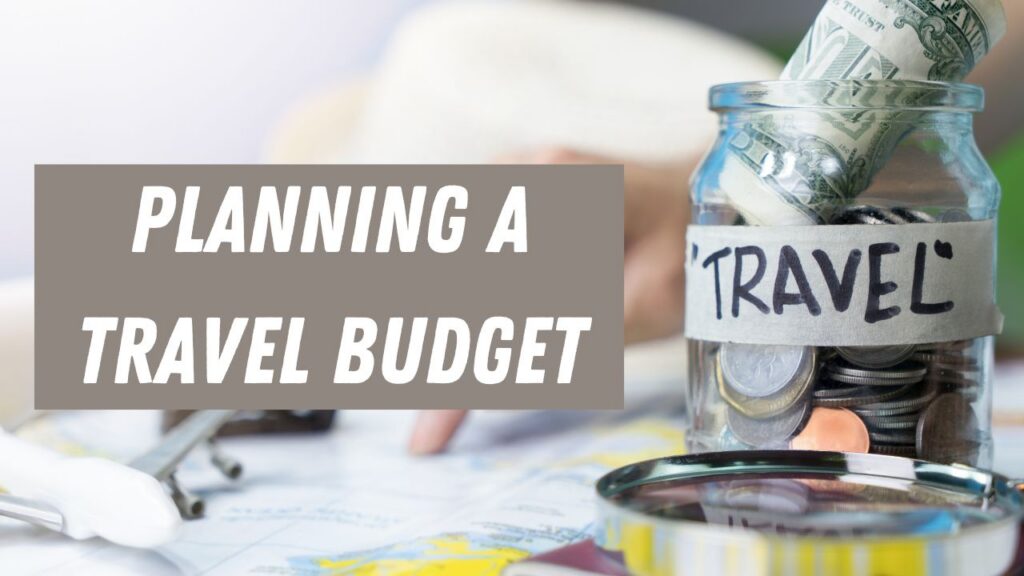
To fundamentally grasp how to plan bleisure on a budget, one must shift their perspective from “Spending Less” to “Capturing More Value per Logistical Unit.” In 2026, excellence in this domain is found in “Resource Layering,” the practice of ensuring that every dollar spent serves a dual purpose: fulfilling a professional requirement while simultaneously reducing the cost of a personal experience.
Multi-Perspective Explanation
From a Procurement Perspective, the objective is “Fixed-Cost Amortization.” The most expensive part of any trip is typically the transcontinental or regional flight. By extending the duration of the stay, the “Per-Day Cost” of that flight decreases significantly. For a budget-conscious professional, the extension is not an added expense; it is a mechanism to lower the average daily cost of the entire venture.
From a Technical Perspective, the focus is on “Infrastructure Independence.” A significant portion of travel “leakage” occurs when a professional must pay a premium for last-minute office space or high-speed data because their budget accommodation failed them. Mastering this involves a one-time investment in a “Mobile Operations Kit” with high-gain antennas, global eSIMs, and portable power that allows the traveler to choose lower-cost “Secondary Accommodations” without risking their professional uptime.
From a Socio-Economic Perspective, success depends on “Geographic Arbitrage.” This involves selecting “Pivot Cities” destinations that are near major business hubs but maintain a significantly lower cost of living. For instance, finishing a client engagement in London and immediately taking a two-hour train to a Northern hub like Manchester or Sheffield can reduce the “Leisure Leg” costs by 40% while offering equal or superior cultural restoration.
Oversimplification Risks
The primary risk in this sector is the “Frugality Fallacy,” choosing a budget option that introduces so much logistical friction (poor sleep, long commutes, unreliable Wi-Fi) that it compromises professional work. A single missed meeting or a sub-par deliverable creates a “Professional Debt” that no amount of leisure savings can repay. Furthermore, the “Miles and Points” obsession often leads travelers to ignore the “Ground-Level” cost, such as food, local transit, and incidental fees, which often account for 60% of a bleisure budget.
Contextual Background: The Evolution of Value-Based Mobility
The trajectory of travel economics has moved from “Loyalty-Centric” (2010–2020) to “Utility-Centric” (2024–2026). In the previous decade, cost-saving was synonymous with “Hacking” airline miles and hotel points. This was an era of brand loyalty, where travelers often overpaid for a flight just to stay within a specific alliance.
By 2025, the proliferation of “Flat-Rate” subscription models (such as global coliving passes) and the rise of the “Managed Apartment” sector disrupted this loyalty loop. Travelers began to value “Operational Reliability” over “Brand Perks.” This was accelerated by the 2026 Global Inflation Stabilization, which saw the cost of traditional five-star hospitality rise by 30%, while the “Shared Infrastructure” sector (coworking/coliving) remained relatively stable due to its higher occupancy efficiency.
Today, the most successful bleisure planners operate like “Logistical Engineers.” They no longer seek the “Cheapest Room”; they seek the “Most Productive Node.” This shift has democratized high-end travel, allowing those on a moderate budget to experience world-class destinations by leveraging the efficiency of the modern distributed-work ecosystem.
Conceptual Frameworks and Mental Models
Strategic cost-management requires mental models that prioritize “Systemic Efficiency” over “Surface-Level Savings.”
1. The “Logistical Anchor” Heuristic
This model suggests that every trip has a “Fixed Anchor” (the primary business reason). The goal is to build the “Leisure Layer” as close to the anchor as possible to minimize “Transport Friction.” If the extension requires a second expensive flight, the “Budget” status of the trip is likely voided.
2. The “Friction-to-Restoration” Ratio
This framework evaluates the savings by the amount of stress it introduces. If a $50/night saving results in a 60-minute commute to the nearest reliable coffee shop or workspace, the “Restoration Value” of the leisure time is significantly degraded. High-authority planners only accept savings that maintain a “Low Friction” profile.
3. The “Incremental Marginal Cost” Matrix
This model asks: “What is the true cost of staying one more day?” Often, once the flight and the initial logistical setup are paid for, the marginal cost of an extra day in a secondary city is surprisingly low—frequently less than the cost of a typical day at home. This realization is the foundation of “Slow Bleisure.”
Key Categories of Budget-Conscious Bleisure Modalities
Identifying the correct modality is essential for aligning the experience with the professional’s “Revenue Capacity.”
| Category | Primary Saving Lever | Key Trade-off | Best For |
| The “Shoulder-Season” Pivot | Lowering accommodation costs by 30-50%. | Unpredictable weather/limited amenities. | Long-term project deployments. |
| Secondary City Positioning | Lower “Ground-Level” costs (food/transit). | Potential loss of Tier-1 “Prestige.” | Independent consultants/SME owners. |
| Infrastructure-First Coliving | Bundling work-space and sleep-space. | Reduced privacy/Social fatigue. | Solo travelers/Tech-focused sprints. |
| Managed Apartment Platforms | Kitchen access; zero “Service Tax.” | Higher “Self-Admin” labor. | Families; mid-senior managers. |
| The “Stay-Put” Month | Monthly rates vs. Nightly rates. | High “Opportunity Cost” of movement. | Deep-work phases; Creative pivots. |
| Multi-Modal Transit Hubs | Utilizing rail over regional flights. | Increased travel time. | European/East Asian regional tours. |
Detailed Real-World Scenarios and Decision Logic
The “London/York” Strategy
A strategist has a four-day engagement in London. The weekend hotel rate in Shoreditch is $420/night.
-
The Failure Mode: Staying in London for the extension and spending $800 on two nights of “leisure” that are mostly spent navigating crowds.
-
The Logic: Taking a two-hour train to York for the weekend. The high-speed rail cost ($90) and a boutique guest house ($140/night) result in a total cost of $370 for the weekend.
-
Outcome: The strategist experiences a UNESCO-grade historical city while saving $430 compared to staying in the Tier-1 hub.
The “Data-Roam” Disaster
A developer extension in a remote coastal village in Portugal.
-
The Conflict: The “Budget” Airbnb’s Wi-Fi fails during a critical bug-fix window.
-
The Action: Instead of paying a $150 “Premium Emergency Pass” at a local hotel, the developer deploys their pre-configured “Resilience Kit” (Starlink Mini and local 5G eSIM).
-
Outcome: The project remains on track, and the “Budget” status of the trip is preserved by avoiding emergency surcharges.
Planning, Cost, and Resource Dynamics
The “Economic Yield” of a bleisure trip is determined by the “Output-to-Expense” ratio.
Bleisure Resource Allocation Mapping (2026 Estimates)
| Resource | Investment Type | Operational Risk | Primary Value |
| Aviation Anchor | Fixed/Sunk Cost. | Delay/Cancellation. | Geographic access. |
| “Ground-Level” Burn | Variable/Daily. | Inflation/Surge pricing. | Local immersion/Nutrition. |
| Technical Stack | Fixed/One-time. | Hardware failure. | Professional continuity/Uptime. |
| Restoration Buffer | Temporal/Hidden. | Cognitive burnout. | Long-term career sustainability. |
Tools, Strategies, and Support Systems
To effectively master how to plan a bleisure on a budget, professionals should deploy a “Defensive Value Stack”:
-
“Reverse-Engineering” Hotel Pricing: Using tools that monitor price drops after booking. In 2026, 25% of travelerssavede significant amounts by re-booking the same room when the algorithm dropped the price 48 hours before arrival.
-
The “Grocery-First” Protocol: Prioritizing accommodations with kitchens. Reducing restaurant meals from 3 times a day to 1 time a day is the single largest controllable variable in a travel budget.
-
Local “Work-Hub” Arbitrage: Instead of paying for a “Hotel Workspace,” identify local libraries or “pay-as-you-go” community hubs that offer 1Gbps speeds for the price of a membership fee.
-
Multi-Currency Digital Wallets: Using “Interbank-Rate” cards to avoid the 3-5% “Invisible Tax” charged by traditional banks on every international transaction.
-
Secondary-City “Deep Dives”: Utilizing digital nomad databases to identify cities with a high “Quality of Life to Cost” ratio (e.g., Valencia over Barcelona, or Da Nang over Ho Chi Minh City).
-
“Travel-Day” Optimization: Scheduling long-haul segments on Tuesdays or Wednesdays to capture the lowest “Aviation Anchor” costs.
-
Portable Ergonomics: Investing in a 500g mechanical keyboard and laptop stand to turn a “Budget” dining table into a high-performance workstation.
Risk Landscape and Failure Modes
-
“The Connectivity Cascade”: Saving $200 on lodging that lacks stable power, leading to a missed $5,000 project milestone.
-
“The Burnout Paradox”: Choosing a 12-hour bus to save $50, resulting in two days of lost professional productivity due to physical exhaustion.
-
“The Compliance Trap”: Failing to separate “Business” and “Leisure” expenses correctly, leading to a corporate audit that flags the entire trip as a personal taxable benefit.
Governance, Maintenance, and Long-Term Adaptation
-
The “90-Day Geo-Review”: Travel markets are volatile. The “Value Hub” of last year may be the “Overpriced Trend” of this year. Audit your preferred destinations every quarter.
-
The “Hardware Refresh Cycle”: Ensure your “Resilience Kit” (batteries, cables, eSIM compatibility) is tested before every deployment.
-
Layered Adaptation Checklist:
-
Is my “Cost-per-Restored-Hour” lower than staying at my home base?
-
Does the destination offer a “High-Reliability” backup workspace?
-
Have I secured “Local-Rate” transit and data?
-
Measurement, Tracking, and Evaluation
-
Leading Indicators: “Time-to-Productivity” (minutes from check-in to first work block); “Grocery-to-Dining Ratio”; “Infrastructure Uptime %.”
-
Lagging Indicators: “Total Trip ROI”; “Retention of Personal Health Markers”; “Project Deliverable Quality.”
-
Documentation Examples:
-
The “Friction Log” (Tracking every time a “saving” caused a professional headache).
-
The “Amortization Ledger” (Showing how the daily cost dropped over a 14-day stay).
-
Common Misconceptions and Oversimplifications
-
“It’s about getting a free vacation”: False. It’s about optimizing professional mobility to sustain a high-performance career.
-
“Cheapest is always best”: False. Reliability is the only metric that matters for a professional.
-
“Points are free money”: False. The “Opportunity Cost” of earning points often leads travelers to overpay for specific brands.
-
“I’ll work from the beach”: False. Glare, heat, and sand are the enemies of professional hardware and focus.
-
“I don’t need a kitchen”: False. Food inflation is the primary “silent killer” of bleisure budgets.
-
“Slow travel is for the rich”: False. Slow travel is the most effective way for middle-market professionals to reduce their “Daily Amortized Cost.”
Ethical, Practical, or Contextual Considerations
Cost reduction should not manifest as “Extractive Tourism.” In 2026, the elite traveler avoids “Air-Sourced” grocery chains and global delivery apps, opting instead for local markets and neighborhood-run businesses. Practically, this means acknowledging that your “Budget” stay should not be subsidized by the displacement of residents. Intellectual honesty requires recognizing that a “Value Hub” is someone else’s home, and contributing to its local economy is a prerequisite for long-term sustainable mobility.
Conclusion
The architecture of a budget-conscious bleisure strategy is a matter of “Systems Engineering,” where the goal is to stabilize the professional infrastructure so that the personal extension remains restorative. By applying frameworks like the “Logistical Anchor” and prioritizing “Infrastructure Independence,” professionals can navigate the global economy without allowing “Frictional Inflation” to erode their earnings. Success in 2026 is found in the patience to engineer one’s environment and the tactical foresight to prioritize “Deep Restoration” over surface-level luxury. Ultimately, the best way to plan bleisure on a budget is to build a model so resilient that it never requires an emergency surcharge.